




Showing 20 search results of 4,338 videos found for

Governments worldwide aim to reduce carbon emissions by 80% or achieve net zero by 2050, yet current collective actions appear insufficient. Matthew Tolley's talk reveals how individual choices can significantly cut personal carbon footprints from 12 to 2.5 tonnes annually. These simple, actionable steps require minimal lifestyle changes, save money, and don't depend on government or business intervention.
Matthew, a qualified Energy Efficiency Assessor, also assists schools, charities, and businesses in saving money by adopting energy-saving technologies, focusing on measures with a payback period under two years.
This talk was given at a TEDx event. Learn more at https://www.ted.com/tedx.

Humanity's population has surged from 1 billion in 1800 to 7 billion today, now producing enough food for 10 billion. This prosperity, driven by agricultural and water revolutions, comes with significant environmental costs. Daniel assesses the critical food and water challenges of the coming century and explores opportunities for sustainable solutions.
A geochemist and lecturer at the University of Lincoln, Daniel researches the chemical interplay between humans and the environment. His work, published in international journals, investigates how earth's chemistry shapes human lives and how human actions impact nutrient and contaminant processes in soils, rivers, and groundwaters. This talk was given at a TEDx event. Learn more at ted.com/tedx.

Addressing the global litter crisis, Ryan has developed a scheme to empower individuals and groups to create cleaner, more sustainable environments. His initiative, CLEAN hubs, applies behavioral insights to offer an accessible solution, with the goal of launching in every UK city.
Ryan's journey began two years ago, noticing widespread litter while working on UK railways. Realizing the need for a collective effort, he aims to collaborate with councils and community groups nationwide to implement his vision. This talk was presented at a TEDx event. Learn more at https://www.ted.com/tedx.

Explore the extensive library of TED Talks, transcripts, and personalized recommendations at TED.com. Entrepreneur Andrew Forrest and TED's Chris Anderson discuss plastic's economic value versus its environmental impact, proposing a plan for major companies to fund an environmental revolution. Their vision involves industry transitioning to recycled plastic, moving away from fossil fuels.
The TED Talks channel features inspiring talks from leading thinkers on technology, entertainment, design, science, business, and global issues. Feel free to link, embed, and share these ideas. For commercial use, submit a Media Request. Connect with TED on Twitter, Facebook, and subscribe to our YouTube channel.

The global distribution of heavy wine bottles, primarily relying on diesel, significantly contributes to the wine industry's environmental footprint.
Napa winemaker Dan Petroski states that this process alone accounts for 40-45% of the sector's total greenhouse gas emissions.

The Greater Virunga Landscape is a globally rich ecosystem, yet Uganda faces significant deforestation and rapid population growth. To counter these challenges, a forest landscape restoration project is scaling up efforts. The goal is to restore 120,000 hectares, up from 16,000, adjacent to protected areas.
This initiative partners with smallholder farmers, developing forest value chains for both socio-economic transformation and biodiversity conservation. WWF is crucial in this, creating sustainable business models to attract investment for tree planting, processing equipment, and conservation activities. These models will improve local livelihoods, ensure a sustainable timber supply, and protect vital primary forests.

Addressing the urgent climate emergency, Emma Howard Boyd, Chair of the Environment Agency and UK Commissioner to the Global Commission on Adaptation, will deliver the 2019 RSA President's Lecture. She will call on governments, industry, and civil society to forge new alliances and discuss leadership principles vital for transformational change.
Stay connected with RSA: Subscribe to our channel! Follow us on Twitter, like us on Facebook, listen to podcasts, and see behind the scenes on Instagram.

Extreme heat and prolonged drought are severely depleting our lakes and rivers. State governments have exacerbated this crisis through gross mismanagement, prioritizing the coal industry and large corporations over the needs of families and farmers.
Despite their role in this escalating problem, governments are now asking citizens to solve the drought. We must unite and demand accountability, forcing them to take responsibility for their actions.
Let's work together to ensure state governments prioritize people and sustainable water management over the coal industry.

Our planet's forests are vital in mitigating climate change by actively removing carbon dioxide from the atmosphere.
Understanding this natural process underscores the importance of tree replanting as a key solution to limit global warming and protect our future.

Professor Carlos Nobre emphasizes the importance of valuing standing forests and their products. He illustrates this by explaining how the açaí berry is projected to generate billions for the Amazon economy.
Nobre also presents his vision for agroforestry as a crucial solution for protecting tropical forests globally.
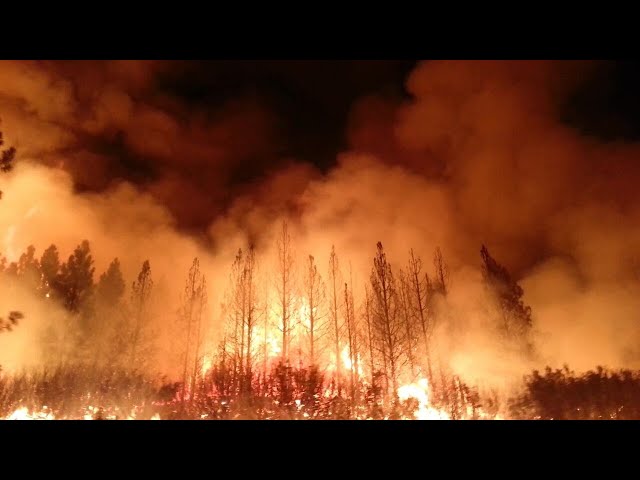
Massive wildfires, exacerbated by climate change, have devastated California. However, experts and victims primarily attribute these disasters to PG&E's criminal negligence. Faulty power lines and ignored maintenance since the 1990s led to deadly events like the Camp Fire, resulting in $30 billion in liabilities and the company's bankruptcy. Calls for accountability and reform are mounting.
Beyond wildfires, California faces extreme drought and rainfall cycles, intensified by climate change. This tumultuous water history and future needs are explored in Mark Arax's book, "The Dreamt Land." Discussions center on sustainable water management for the state's agriculture and population. Learn more at climateone.org.

Katie Wallace, New Belgium Brewing's director of social & environmental impact, believes regenerative agriculture can transform beer's significant agricultural footprint into a solution.
Wallace is also optimistic that businesses and policymakers will embrace 100% renewable energy to further reduce their environmental impact.
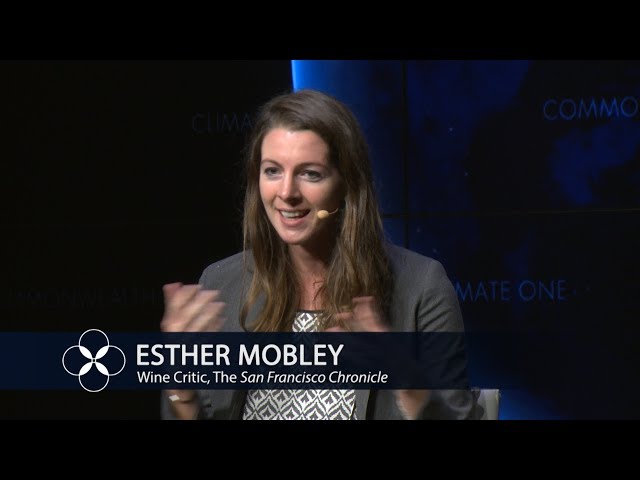
Wildfires are increasing in Northern California during the mid-growing season. This trend can cause grapes to develop an undesirable, smoky flavor.
San Francisco Chronicle wine critic Esther Mobley notes that these grapes can sometimes emerge tasting like an ashtray.

Border Patrol is consuming millions of gallons of groundwater for wall construction in southeastern Arizona. This practice imperils rare desert springs and the endangered species that depend on them.
We visited the San Bernardino National Wildlife Refuge on the border to observe the impact firsthand.

Nadya, living in the world's second-largest plastic-contributing country, champions personal responsibility: "Be an example. Start from yourself and together we do good things to our environment."
She adopted this philosophy two years ago during an environmental NGO internship. Working on a zero-waste-to-ocean project, Nadya realized she, too, had been a significant waste contributor, prompting her commitment to change.
This message was shared at a TEDx event, independently organized by a local community. Learn more about TEDx at https://www.ted.com/tedx.

Angela Whitney recently highlighted the critical importance of policymakers developing climate investment plans. She shared her insights during the Workshop on Implementation of Nationally Determined Contributions and the Role of National Finance Institutions.
To learn more about RMI's work in this vital area, visit their Climate Finance Team page.

Siva Visvesvaran advocates for rethinking waste management beyond recycling, emphasizing reduction and reuse to minimize environmental impact. He develops innovative solutions, such as a Linear Water Storage system for rainwater, and studies electrical engineering to bring sustainable energy to developing countries. As co-founder of Project Paplet, his 'Reuse Initiative' transforms one-sided used paper into booklets for 50 refugee schools in Malaysia via UNHCR, saving around 5 tons of paper since 2016. Siva is also a Royal Commonwealth Society associate fellow and a 2018 Queen's Young Leader.
This talk was given at a TEDx event. Learn more at https://www.ted.com/tedx.

Explore the full library of TED Talks at TED.com, offering subtitles, translations, and personalized recommendations. Our channel features leading thinkers and doers sharing ideas on technology, science, business, global issues, and the arts in 18 minutes or less.
Discover actionable insights, such as Mohammad Modarres's talk on empowering farmers and transforming the food industry. Learn how your purchasing power can support local agriculture and address the disparity where farmers often cannot afford the very foods they grow.
Connect with TED on social media: follow us on Twitter, like us on Facebook, and subscribe to our YouTube channel. For commercial use, submit a Media Request via media-requests.ted.com.

Deep-sea footage from Nautilus Live shows marine life scavenging a baleen whale carcass. Explore more about marine life in our Encyclopedia: http://bit.ly/2oc1zBb.
Join our community of Wavemakers! Subscribe to our channel and connect with us:
Instagram: https://www.instagram.com/oceana/ Twitter: http://twitter.com/oceana Facebook: https://www.facebook.com/oceana/.

It was over an ironing board that Jason realized many everyday products are 90% water, contributing to billions of pounds of plastic waste annually. This insight inspired Replenish, a reusable bottle and concentrate refill platform. It empowers consumers to add their own water at the point of use, breaking the endless cycle of waste in consumer goods.
The Ellen MacArthur Foundation, a UK charity launched in 2010, accelerates the transition to a circular economy. Founded by Ellen MacArthur, it is a global thought leader influencing business, government, and academia. Explore their work at ellenmacarthurfoundation.org and connect via YouTube, Instagram, or Twitter.
Environmental Scientist and Advocate
What EarthSayers stands for
Discover Diverse Voices on EarthSayers
Unlike algorithm-driven platforms that push you into a content bubble, we ensure you hear a variety of perspectives from scientists, activists, Indigenous leaders, business innovators, and everyday citizens working toward sustainability.
EarthSayers CINEMA
Watch, learn and lead—sustainability starts with you.
The Thinking Game | Full documentary | Tribeca Film Festival official selection
“The Thinking Game” is the inside story of DeepMind's groundbreaking AI research, culminating in the Nobel Prize-winning AlphaFold breakthrough. Filmed over five years by the award-winning team behind "AlphaGo," this documentary explores co-founder Demis Hassabis's lifelong pursuit of artificial general intelligence and the rigorous scientific journey from mastering strategy games to solving the 50-year-old protein folding problem.
Following its world premiere at the Tribeca Festival, "The Thinking Game" is now available to watch for free. For those interested in hosting a screening for a classroom, community, or workplace, visit: rocofilms.com/films/the-thinking-game/.


