



Special Collections:
Food Security
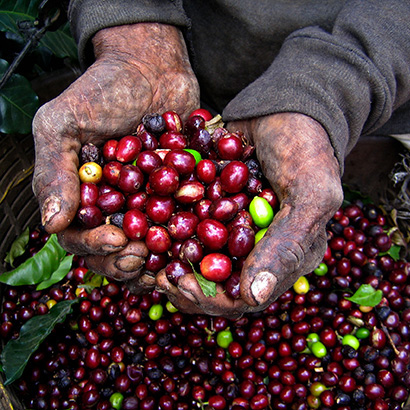
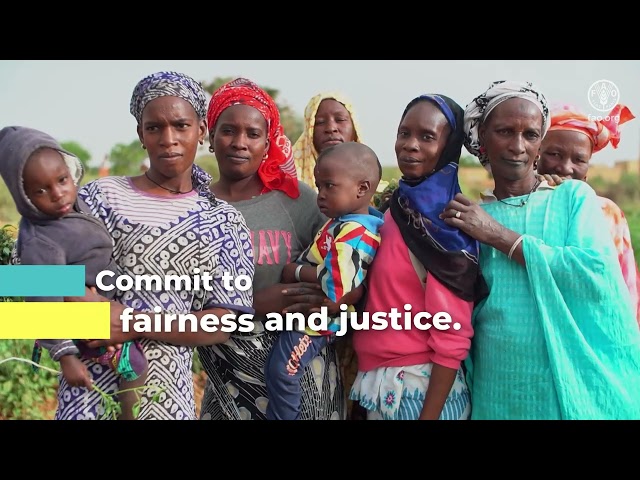
Women play a crucial role in agrifood systems, yet they face significant barriers and inequalities that limit their potential. Equal compensation and opportunities for women would benefit households and communities, enhancing economies, reducing hunger, and increasing dietary diversity.
The "Commit to Grow Equality" initiative focuses on empowering women in agrifood systems, urging partners to prioritize gender equality in their interventions. Learn more at FAO.
Subscribe to our channel here and follow FAO on social media: Facebook, Instagram, LinkedIn, TikTok, X, Weibo.

This documentary celebrates the International Year of the Woman Farmer 2026 by showcasing women in Bhutan who are preserving the country's buckwheat heritage while creating new opportunities for the future.
Follow the journey of Bhutanese buckwheat from field to mill, kitchen, and market, highlighting generations of traditional knowledge and women's vital contributions to agrifood systems. Discover more about Bhutanese buckwheat as a GI product in this video.
Subscribe to our channel here and follow FAO on Facebook, Instagram, LinkedIn, TikTok, X, and Weibo.

The Global-Hub on Indigenous Peoples’ Food and Knowledge Systems is a leading think tank that fosters intercultural knowledge co-creation. It comprises 40 institutions, 5 research networks, and over 250 experts from diverse sociocultural regions worldwide.
This initiative connects Indigenous Peoples’ knowledge with global policymaking, emphasizing its importance. The flagship publication, the White/Wiphala Paper on Indigenous Peoples’ Food Systems, is part of the White/Wiphala publication series. For more information, visit the Global-Hub.
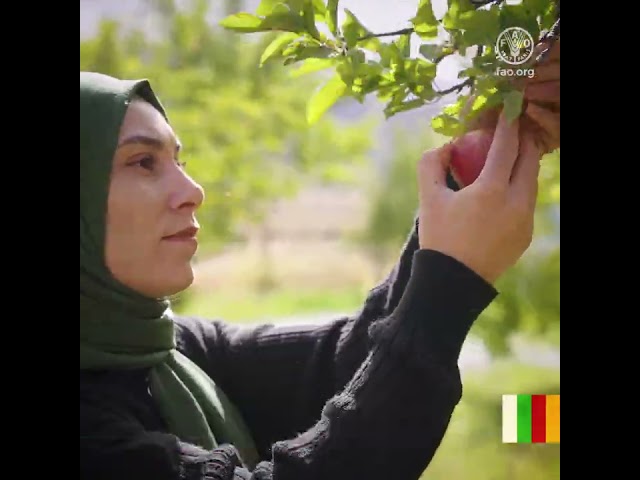
Combining innovative solutions with traditional knowledge and inclusive methods can provide everyone with access to sufficient, diverse, safe, and nutritious foods, while also protecting the planet for future generations.
Innovate today. Nourish tomorrow.
Learn more about World Food Day 2026.

The scientific bottom trawl survey is a vital tool for assessing demersal species and studying seafloor life. By towing a weighted net across the seabed, scientists collect organisms to analyze their distribution, abundance, and biology. However, this method alone cannot capture the complexity of marine ecosystems, as some species are hard to sample, and sensitive habitats require non-invasive techniques.
Innovative tools like remotely operated vehicles (ROVs) and environmental DNA (eDNA) are enhancing the ability of scientists and fisheries managers to monitor marine ecosystems. Stay connected with the GFCM on LinkedIn and X, and subscribe to the FAO on YouTube.

Este video cubre el Encuentro Anual de la Red de Alimentación Escolar Sostenible (RAES) 2026, celebrado en Comayagua, Honduras, del 25 al 28 de agosto. Organizado por la FAO y el gobierno de Brasil, el evento reunió a países miembros para intercambiar experiencias y avanzar en acciones conjuntas para mejorar la cobertura y calidad de la alimentación escolar.
Para más información, visita FAO. Suscríbete al canal de YouTube de la FAO aquí y síguenos en nuestras redes sociales: Facebook, Instagram, LinkedIn, TikTok, X, Weibo.

This video introduces the International Standards for Phytosanitary Measures (ISPMs) and explains how they create a global framework to help countries prevent the spread of harmful plant organisms and ensure safe international trade in plants and plant products.
Subscribe to the FAO YouTube channel here. Follow FAO on social media: Facebook, Instagram, LinkedIn, TikTok, X, Weibo. © FAO: fao.org #SDGs #Agenda2030 #GlobalGoals

The video showcases the launch of Phase 3 of the Africa Phytosanitary Programme (APP), led by the International Plant Protection Convention (IPPC) Secretariat, now active in 38 African countries. A train-the-trainer workshop in Addis Ababa equipped plant health experts from 18 countries with skills in pest surveillance, digital data collection, and GIS tools.
The APP aims to enhance sustainable phytosanitary systems, improve pest monitoring, support safe trade, and bolster food security across Africa.
Subscribe to the FAO on YouTube: FAOoftheUN. Follow FAO on social media: Facebook, Instagram, LinkedIn, TikTok, X, Weibo.

This video showcases the APP Strategic Partnership Forum, building on the successes of the Africa Phytosanitary Programme (APP) launched in 2023. It emphasizes the importance of partnerships, investments, and long-term support to enhance and expand the programme.
Through continued collaboration, the video illustrates how digital pest surveillance and data collection can benefit stakeholders across Africa and beyond. For more updates, subscribe to the FAO YouTube channel and follow FAO on Facebook, Instagram, LinkedIn, TikTok, X, and Weibo.

Members of the Food and Agriculture for Sustainable Transformation (FAST) Partnership convened at FAO headquarters from September 16-18, 2026, for their annual meeting. Watch FAST Members discuss the Partnership's activities.
Subscribe to the FAO YouTube channel here. Follow FAO on social media: Facebook, Instagram, LinkedIn, TikTok, X, and Weibo.

Experience the vibrant food traditions and innovations of Latin America and the Caribbean at FAO’s Global Exhibition: From Seeds to Foods. Join us from October 8–12 at Circo Massimo, Rome, to explore how biodiversity, local knowledge, and creativity connect seeds to the foods we cherish.
Stay updated by subscribing to our channel on YouTube and follow FAO on social media: Facebook, Instagram, LinkedIn, TikTok, X, and Weibo.

This video highlights the benefits of micro irrigation, showcasing how drip and sprinkler systems efficiently deliver water directly to crops. By reducing water loss and lowering irrigation costs, these methods enhance fertilizer efficiency and help control weeds. Supported by the Pressurized Pipe Irrigation System (PPIS) and the Pradhan Mantri Krishi Sinchai Yojana, micro irrigation promotes water conservation and boosts agricultural productivity.
Learn why every drop of water is crucial for sustainable farming and a secure future. Subscribe to the FAO channel on YouTube and follow FAO on Facebook, Instagram, LinkedIn, TikTok, X, and Weibo.

A Water User Association (WUA) is essential to the Pressurized Pipe Irrigation System (PPIS), enabling farmers to manage irrigation collectively. This video illustrates how WUAs facilitate fair water distribution, maintain infrastructure, promote climate-smart practices, and enhance community involvement, particularly women's leadership.
Discover how farmer-led water governance boosts efficiency, minimizes conflicts and costs, increases crop yields, and fosters resilient farming through collective action and improved coordination with government bodies. Subscribe to the FAO channel here.
Follow FAO on social media: Facebook, Instagram, LinkedIn, TikTok, X, Weibo.

Climate change poses significant challenges for farming, including unpredictable rainfall and rising temperatures. This video highlights how Climate-Smart Agriculture (CSA) enables farmers to adapt by conserving water, enhancing soil health, and increasing productivity while minimizing risks.
Discover effective practices such as efficient irrigation, the Pressurized Pipe Irrigation System (PPIS), drip and sprinkler irrigation, crop diversification, and climate-resilient crop varieties that help create sustainable and resilient farming systems for the future.
Subscribe to the FAO YouTube channel and follow FAO on Facebook, Instagram, LinkedIn, TikTok, X, and Weibo.

The Pressurized Pipe Irrigation System (PPIS) is revolutionizing water delivery to farmers by utilizing underground pressurized pipelines. This method minimizes leakage and evaporation, ensuring efficient and equitable water distribution. The video showcases how PPIS integrates with drip and sprinkler irrigation, digital monitoring, and farmer-led Water User Associations to enhance water-use efficiency, lower irrigation costs, and boost crop productivity.
Smart irrigation practices are empowering farmers to conserve water, improve livelihoods, and promote sustainable agriculture. For more information, visit the FAO India page. Subscribe to our channel here and follow us on social media: Facebook, Instagram, LinkedIn, TikTok, X, Weibo.

Water is essential for agriculture, yet much is wasted due to inefficient irrigation and climate change. This video demonstrates how water conservation and smart irrigation techniques, such as the Pressurized Piped Irrigation System (PPIS), drip, and sprinkler irrigation, can help farmers maximize yield while minimizing water use.
By implementing efficient water management practices, farmers can reduce water losses, lower production costs, and enhance climate resilience. Every drop saved contributes to a sustainable future for agriculture.
Subscribe to FAO on YouTube and follow us on Facebook, Instagram, LinkedIn, TikTok, X, and Weibo.

At the One Health Conference, FAO and partners convened experts to discuss the impact of plastic pollution on agrifood systems and its risks to environmental, animal, and human health. This session launched a new FAO technical brief and an interactive framework created with the London School of Hygiene & Tropical Medicine, which outlines the pathways of plastic from soils and water to food, animals, and people.
Stay updated by subscribing to the FAO YouTube channel: Subscribe. Follow FAO on social media: Facebook, Instagram, LinkedIn, TikTok, X, Weibo.

Agrifood systems play a crucial role in addressing climate and biodiversity challenges while also providing solutions. Transforming these systems is essential for advancing global goals and enhancing food security.
The FAO is highlighting this importance at the triple COPs, including Biodiversity #COP17.
Watch the discussion here: https://youtu.be/QD5lZTUhZPg

The video showcases the FAO's progress in achieving its environmental goals, highlighting annual improvements in performance. It details savings and key initiatives in energy, water, waste, and plastics, including solar PV projects that reduce emissions and reliance on fossil fuels.
Additionally, the video emphasizes efforts to minimize food waste and promote greener workspaces at FAO headquarters and decentralized offices. For more updates, subscribe to the FAO YouTube channel here.
Follow FAO on social media: Facebook, Instagram, LinkedIn, TikTok, X, Weibo. © FAO: www.fao.org #SDGs #Agenda2030 #GlobalGoals

In this episode of The Work We Do, Kaveh Zahedi, Assistant Director-General at FAO, discusses agriculture's vital role in addressing climate change and biodiversity loss. He highlights the challenges posed by El Niño and extreme heat on farmers and agrifood systems, and offers insights on building resilience against these pressures.
Kaveh shares his journey from studying environmental economics to working at the United Nations, emphasizing the interconnectedness of people, the economy, and the environment. For more information, check out the Extreme Heat and Agriculture Report.
Environmental Scientist and Advocate

