




Showing 20 search results of 4,518 videos found for

Deep in the ocean, a variety of marine creatures are preparing for a substantial feast.
Driven by instinct, they await the perfect moment to satisfy their hunger with a significant meal.

Tomas Lamanauskas, Deputy Secretary-General of the International Telecommunication Union (ITU), spoke at a COP29 Press Conference.
The event occurred in Baku, Azerbaijan, on November 16, 2024.

Amid global crises—climate change, ecocide, declining biodiversity, social inequity, injustice, and political turmoil—Indigenous lifeways and values offer a path to a better future. Core Indigenous values like relationship, responsibility, reciprocity, and redistribution guide us to be good stewards of our communities and ecosystems. Birds, our feathered relatives, provide valuable insights into these principles. Join the conversation.
Our panelists are Aimee Roberson (Cultural Survival Executive Director), Ruben Flores (CS Bazaar Artist), Kim Tekwitha Spencer (CS Youth Fellow), and Israel Hernández López (KOEF Grant Partner). Interpretation is available: tinyurl.com/lifeways1120.

This episode of The Circular Economy Show explores Arda Biomaterials, a company transforming brewing waste into innovative leather alternatives. Co-founder Brett Cotten details their process, while Amy Tsang from The Mills Fabrica highlights the crucial role of investment in driving such circular innovations forward.
The Ellen MacArthur Foundation, an international charity, promotes a circular economy that eliminates waste, circulates materials, and regenerates nature. Support our mission by leaving a review or comment on Spotify or YouTube.
Subscribe for more videos: Ellen MacArthur Foundation YouTube. Learn more: ellenmacarthurfoundation.org. Follow us: Instagram, Facebook, Twitter, LinkedIn.

This episode of the Circular Economy Show discusses the Ellen MacArthur Foundation's publication, "The circular economy: A 'triple play' solution for achieving China's climate objectives." Lei Chen and Seb Egerton-Read highlight how circular economy principles offer three key benefits for China: reducing greenhouse gas emissions, securing critical raw materials for renewables/EVs, and increasing economic resilience.
The Ellen MacArthur Foundation is an international charity promoting a circular economy that eliminates waste, circulates materials, and regenerates nature. If you enjoyed this episode, please leave a review or comment to help us spread the word.
Subscribe for more: YouTube. Learn more: ellenmacarthurfoundation.org. Follow us: Instagram, Facebook, Twitter, LinkedIn.

This episode features Indigenous scholar and organizer Nick Estes (Kul Wicasa/Lower Brule Sioux), a Professor at the University of Minnesota and co-founder of The Red Nation. He explores how Indigenous land-based societies advance regenerative solutions to transform capitalism, advocating for Indigenous leadership to ensure a habitable planet.
Estes, a member of the Oak Lake Writers Society, authored Our History Is the Future and contributes to The Red Nation's bi-weekly newsletter, an organization dedicated to Native liberation.
Additional resources, including videos and publications like "The Red Deal," are available. This episode is from the Bioneers: Revolution from the Heart of Nature series. Learn more at the radio and podcast homepage.

At the United Nations Climate Change Conference (COP29) in Baku, Rising Nations Youth Delegate Grace Malie discussed the future of Tuvalu and other island nations.
She met with Valerie Hickey, Global Director of the Environment Department at the World Bank, to address the severe climate impacts facing these vulnerable regions.

Award-winning Oglala Lakota chef Sean Sherman discusses his James Beard Award-winning book, "The Sioux Chef's Indigenous Kitchen." He creates vibrant, healthful, and authentic indigenous cuisine, featuring ingredients like venison, trout, and wild rice. The book was recognized as one of the best cookbooks of 2017 by NPR, Smithsonian Magazine, and others.
Born in Pine Ridge, South Dakota, Sherman has cooked for 27 years. Through his business, The Sioux Chef, he works as a caterer and food educator, earning acclaim from National Public Radio and The New York Times.
Get the book here: https://goo.gle/3Ydj9CX. Moderated by Ida Shen.

High-integrity carbon markets, crucial for climate action and development, face a trust deficit. MIGA's 35+ years of guarantees build trust. Join the launch of MIGA's new letter of authorization template, a WBG Guarantee Platform public good, standardizing host government commitments and securing insurability rights. Learn more: http://wrld.bg/LhvV50U3qbW @MIGAWorldBank
The World Bank Group is committed to a livable planet with clean energy, resilient communities, and stronger economies, ensuring climate action supports development. Join us live in Baku at the World Bank Group Pavilion during COP29, or online. http://wrld.bg/hk5E50U3qi5 #cop29. As a leading source of funding and knowledge, the World Bank promotes poverty reduction, shared prosperity, and sustainable development. http://www.worldbank.org
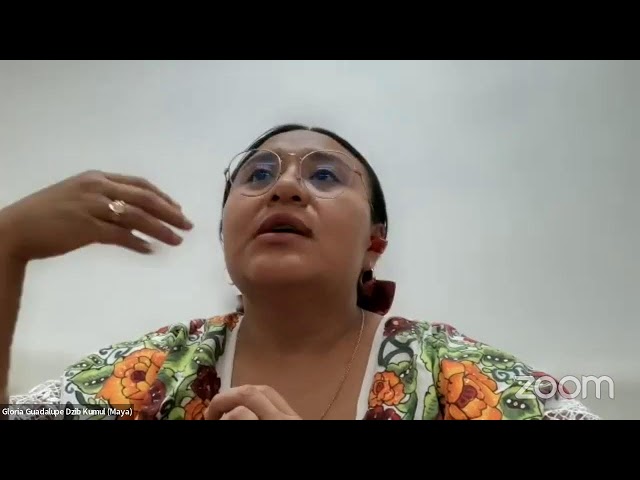
The latest Cultural Survival Quarterly issue celebrates Indigenous educators and youth revitalizing knowledge systems, languages, and lifeways. Indigenous education honors Elders and youth as vital knowledge carriers, fostering their leadership and creativity for thriving communities.
Join the conversation with Indigenous educators, including panelists Aviut Rojas (Nahuat), Eli Wewentxu (Mapuche), Gloria Guadalupe Dzib Kumul (Maya), and Catalina Vergara Realpe (Nasa). Byron Tenesaca Guaman (Kañari Kichwa) will moderate.
Interpretation is available for English and Spanish speakers via tinyurl.com/indiged116.

Nineteen-year-old artist Austin Picinich founded Save Our Salmon through Art (SOS) in 2021. This nonprofit uses public art to educate and empower communities to protect local salmon-spawning streams, many of which are blocked by urban culverts. Picinich was inspired after only three salmon returned to spawn in Juanita Creek near his home.
SOS hosts interactive mural painting events. Picinich designs salmon-themed murals, which volunteers and attendees complete during "SOS Community Days." These events have engaged nearly 750 painters and over 3,000 attendees, raising more than $28,000 for stream restoration and reaching almost a million people through awareness efforts.

Amelia Southern-Uribe, 21, grew up in environmentally vulnerable Southern communities, recognizing early on that environmental justice is linked to the liberation of marginalized groups. In 2019, they founded Arkansas’s first Zero Hour chapter in Fayetteville, which became a model for climate activism across the state.
Addressing Arkansas’s educational disparities, which exacerbate injustice, Southern-Uribe co-founded Roots magazine in 2022. Roots amplifies BIPOC Southern voices and environmental knowledge, providing free art supplies to artists. In its pilot year, over $7,800 was raised to distribute the magazine statewide.

Dr. Gregory Cajete, Director of Native American Studies at the University of New Mexico, explains that Indigenous physicists engage with the world through active participation, not just observation.
This approach involves their entire "sensual being," rooted in the native understanding that everything is "alive" with energy.

Dr. Leroy Little Bear presented a talk exploring the diverse conceptualizations and understandings of Indigenous Knowledge.
His discussion highlighted the varied perspectives and interpretations surrounding this vital subject.

Ishanvi Shetty, a 15-year-old 11th grader from GEMS Modern Academy in Dubai, presents a thought-provoking talk on combating the climate crisis through AI.
An avid public speaker, debater, and philosophy enthusiast, Ishanvi is deeply committed to youth empowerment and environmental advocacy. She actively participates in sustainability initiatives, volunteering, and entrepreneurial ventures, focusing on the intersection of climate change and AI.
This talk was presented at an independently organized TEDx event. Learn more at ted.com/tedx.

Our brains are wired for the familiar, but changing this wiring can transform your life. Neuroscientist Nicole Vignola explains how deeply rooted beliefs, often shaped by upbringing and natural biases like negativity and confirmation, can limit our potential and keep us trapped in old thought patterns.
However, our brains are capable of change at any age. By practicing metacognition—observing our thoughts—and challenging automatic beliefs, we can rewire our perceptions and create empowering new narratives. This approach helps us break free, fostering a mindset for human optimization, health, and peak performance. Read more from Nicole Vignola here.

Published on April 20, 2018.
The Sustainable Development Goals (SDGs) are a universal call to action to end poverty, protect the planet, and ensure peace and prosperity for all. For more information, visit the UN Sustainable Development Goals website.
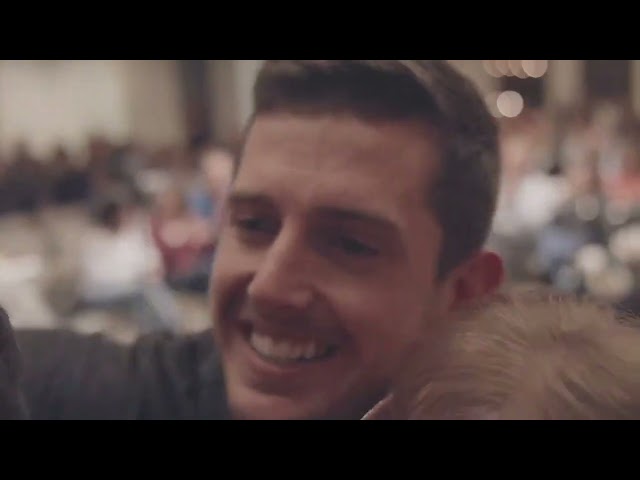
Soul Sanctuary explores Beit T'Shuvah, a Jewish faith-based, long-term addiction treatment center. Here, residents find dignity and respect through *t'shuvah*, a Jewish practice emphasizing accountability and right action. The program helps individuals overcome addiction, presented as a mental, physical, and spiritual malady.
Infused with joy and hope, the documentary invites participants to envision a fulfilling life free from drugs and alcohol. It showcases how people reconnect through therapy, spiritual counseling, dance, choir, and internships. The film's trailer features Harriet Rossetto, the program's founder.

Stand Down events are crucial initiatives designed to help traumatized Veterans overcome homelessness and reintegrate into society. These three-day gatherings provide essential medical, dental, and legal services, but their primary impact lies in restoring a vital sense of community. Founder Dr. John Natchison aptly describes them as a "drug-free Woodstock combined with Maslow's hierarchy of needs and a family picnic."
With over 300 events across the U.S., Stand Down mobilizes 2,000 volunteers to welcome 1,000 Veterans at each session. Recognizing that Veterans disproportionately experience trauma, PTSD, substance abuse, and homelessness, these events foster the community and connection necessary for them to recover their purpose and passion.

Recovery Cafe is a refuge of hope, healing, and transformation. It values individuals often ignored, offering loving attention. Through good nutrition, connection, and community, it combats isolation, loneliness, and recidivism.
This membership organization is not a drop-in or crisis center; it helps people find value and come back to life. After viewing the trailer, visit their website.
Environmental Scientist and Advocate
What EarthSayers stands for
Discover Diverse Voices on EarthSayers
Unlike algorithm-driven platforms that push you into a content bubble, we ensure you hear a variety of perspectives from scientists, activists, Indigenous leaders, business innovators, and everyday citizens working toward sustainability.
EarthSayers CINEMA
Watch, learn and lead—sustainability starts with you.
The Thinking Game | Full documentary | Tribeca Film Festival official selection
“The Thinking Game” is the inside story of DeepMind's groundbreaking AI research, culminating in the Nobel Prize-winning AlphaFold breakthrough. Filmed over five years by the award-winning team behind "AlphaGo," this documentary explores co-founder Demis Hassabis's lifelong pursuit of artificial general intelligence and the rigorous scientific journey from mastering strategy games to solving the 50-year-old protein folding problem.
Following its world premiere at the Tribeca Festival, "The Thinking Game" is now available to watch for free. For those interested in hosting a screening for a classroom, community, or workplace, visit: rocofilms.com/films/the-thinking-game/.


