




Showing 20 search results of 4,518 videos found for

Electric vehicles (EVs) are indeed better for the environment, confirms Hannah Ritchie, deputy editor at Our World In Data. Although EV manufacturing, particularly for batteries, is more energy-intensive, this initial carbon footprint is quickly offset by cleaner operation.
For instance, in the UK, extra production emissions are typically recouped within two years of driving. After this period, EVs consistently emit significantly less CO2 than comparable petrol or diesel cars. Over its lifetime, an EV can reduce emissions by 1/2 to 2/3 compared to a conventional vehicle.

Dr. Shane Gero's groundbreaking research deciphers sperm whale communication, revealing their complex, intelligent lives and cultures. His work suggests whales are "people too," urging us to learn deep listening for respectful coexistence.
Gero, a Canadian whale biologist and National Geographic Explorer, founded The Dominica Sperm Whale Project and leads biology for Project CETI. His science, which formed the basis for the Emmy-winning series *Secrets of the Whales*, is transforming our understanding of marine life. Learn more at shanegero.com.
This episode is part of the Bioneers: Revolution from the Heart of Nature series, exploring these vital insights.

Welcome to The Freethink Interview, a series from our sister channel @freethink, featuring thought-provoking conversations with the new generation of builders, leaders, and thinkers shaping technological progress.
This episode highlights Casey Handmer, founder and CEO of Terraform Industries. He believes solar energy is key to a future free from fossil fuels and extreme poverty. His company pioneers technology to create synthetic natural gas from sunlight and air, leveraging simple chemistry and advanced solar power.
Handmer envisions solar as a catalyst for human progress, providing cheap, abundant energy globally to potentially eliminate extreme poverty. Subscribe to Freethink: https://freeth.ink/youtube-subscribe. Watch next: https://www.youtube.com/watch?v=mFjg1qEsO04

Celebrate your pals this Pal-entine's Day! Guardian dogs, like [dog's name], are vital companions for cattle, protecting them from nocturnal predators that approach the farm.
Learn more about these incredible canine protectors by reading our blog.

Boudreaux, President & CEO, discusses Oberon Fuels' mission to decarbonize the fuel and energy sectors. The company aims to slash the environmental impact of fuels, particularly in hard-to-abate areas like heavy-duty transportation and agriculture.
Oberon achieves this through renewable dimethyl ether (rDME). Their low or carbon-negative rDME fuel can reduce LPG's carbon intensity by up to 60% when blended, potentially cutting global CO2 by 750 million metric tons annually. rDME also offers a compelling approach for transporting hydrogen for its fast-growing applications.

The Center for Biological Diversity is a leading organization of lawyers, scientists, and activists dedicated to protecting endangered species and habitats worldwide. Learn more about their work: biologicaldiversity.org.
All footage ©2025.

On November 5, WECAN Executive Director Osprey Orielle Lake addressed the GLOBE COP26 Legislators Summit at the Scottish Parliament. She urged global leaders to reject false solutions, advocating for climate justice, Indigenous rights, keeping fossil fuels in the ground, and greater inclusion of women and frontline communities in decision-making.
Lake highlighted that current country commitments fall short of the Paris Agreement's 1.5-degree target. She presented a "Call to Action" from the Global Women's Assembly for Climate Justice, outlining how existing frameworks can achieve this goal. This call represents millions of women and feminists worldwide.
Read the Call to Action Statement and Framework Recommendations.

WECAN Executive Director Osprey Orielle Lake addressed world governments at the UN ahead of COP26, declaring a refusal to sacrifice future generations for corporate greed and political power. She urged leaders to fight for social, racial, economic justice, and Indigenous and human rights, emphasizing that communities need climate justice now.
Lake demanded an end to "sacrifice people" and "sacrifice zones," challenging governments to confront the fossil fuel industry and deliver the promised $100 billion for a just transition. Highlighting that current commitments fall short of the 1.5°C target, she presented a "Call to Action" from the Global Women’s Assembly for Climate Justice, outlining existing frameworks.
Read the Call to Action Statement here and the Framework Recommendations here.

During WECAN's Climate Week events, Thilmeeza Hussain, Permanent Representative to the UN and Ambassador from the Maldives, spoke with WECAN Executive Director Osprey Orielle Lake. Their discussion focused on climate justice policies, women's leadership, and accelerating just, resilient, community-led solutions.
This event was part of the Women's Earth and Climate Action Network (WECAN) three-day Climate Justice Forum. Titled "Facing the Climate Emergency on the Road to COP27: Solutions and Perspectives from Global Women and Gender Diverse Leaders," the forum took place September 20-22.
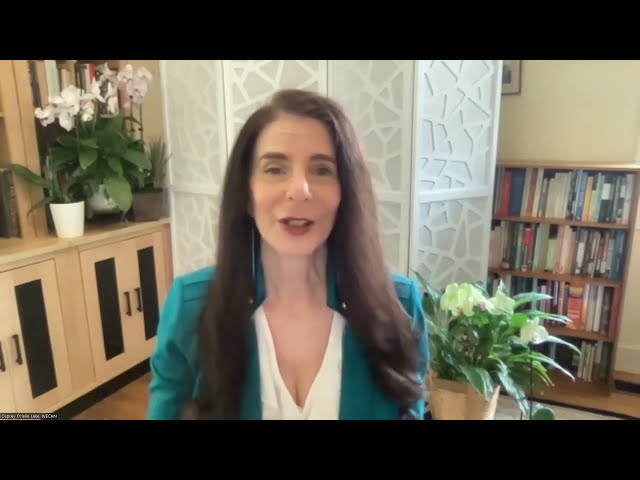
In June 2022, Osprey Orielle Lake delivered a presentation at Scenarios Forum Session 93.
Her talk, titled "Addressing the gender dimension in socioeconomic scenarios," explored policy and climate change impacts on gender equality, and gender equality's role as a driver of change.
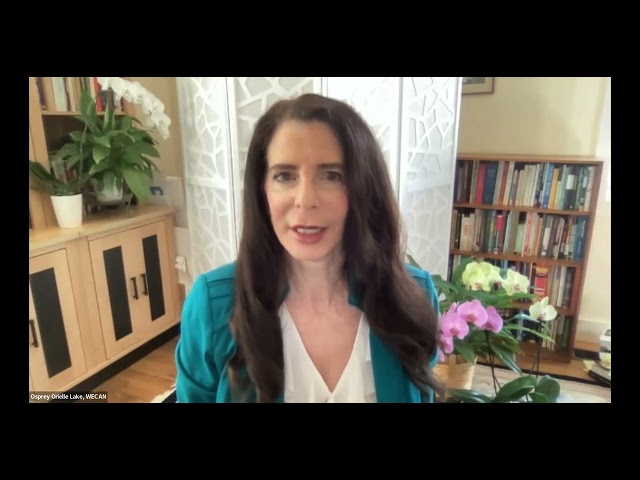
Indigenous women are leading global efforts to uphold Indigenous rights, sovereignty, and Free Prior and Informed Consent (FPIC) in interactions with financial institutions and corporations. These institutions often perpetuate human and Indigenous rights violations, particularly in extractive industries. A recent event highlighted the need for these entities to implement FPIC, Indigenous rights, and due diligence, while investing in climate justice solutions centered on Traditional Ecological Knowledge.
Given the climate crisis, respecting Indigenous knowledge, ways of life, and FPIC—including the right to say “no” to extraction—is paramount, as 80% of Earth's biodiversity remains on Indigenous lands. This discussion took place at a formal side-event of the United Nations Permanent Forum on Indigenous Issues 2022, featuring Indigenous women leaders and global advocates like Sônia Guajajara and Casey Camp-Horinek.
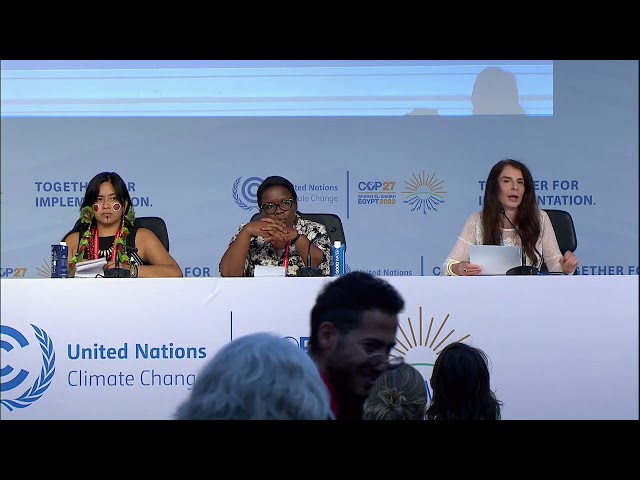
International women leaders convened a press conference to discuss feminist and women-led visions for a healthy, equitable future. They shared insights from global movements, examined the impacts of international climate policies, and proposed strategies and alternatives.
Speakers included Neema Namadamu (DRC), Casey Camp Horinek (USA), Anne Songole (FEMNET, Kenya), Taily Terena (Brazil), and Osprey Orielle Lake, Executive Director of the Women's Earth and Climate Action Network (WECAN).

Facing escalating climate and ecological crises, humanity seeks a new legal framework and economy based on living in balance with Earth, where human rights do not extend to dominating nature. The Rights of Nature movement offers a systemic solution, rapidly growing globally.
A recent press conference showcased how this framework protects biodiverse ecosystems, Indigenous sovereignty, and human rights. Advocates from organizations like WECAN and Health of Mother Earth Foundation shared insights.
During the event, a White Paper on the Legal Rights of Nature Framework, co-authored by WECAN, Movement Rights, and the Global Alliance for the Rights of Nature (GARN), was released. Read the report here.
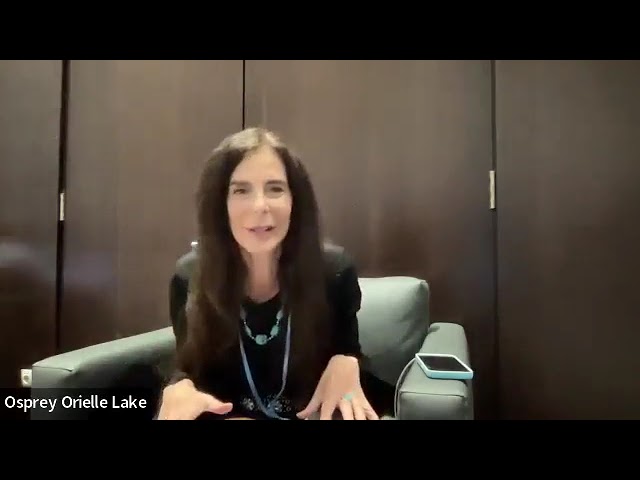
Global movements are addressing the escalating climate crisis, with women and gender-diverse leaders amplifying their voices in response to COP27. This event featured direct reports from the negotiations, sharing critical insights, report releases, and urgent calls to action, alongside global women's demands, struggles, and solutions.
The diverse panel included leaders from Indigenous communities, youth activists, and environmental organizations worldwide. Representatives from groups like DIVA for Equality, Reacción Climática, Youth Advocates for Climate Action Philippines, The Chisholm Legacy Project, Amazon Watch, and the Women's Earth and Climate Action Network (WECAN) offered vital perspectives from most affected peoples and areas.

At a COP27 UN Side Event, "Women for Climate Justice" convened grassroots, frontline, and Indigenous women leaders with international climate justice organizations. They addressed the root causes of interlocking crises, advocating for solutions rooted in a climate justice framework.
Discussions highlighted crucial areas like forest and biodiversity protection, Indigenous rights, agro-ecology, and fossil fuel resistance. Speakers emphasized safeguarding women land defenders and promoting community-led solutions, showcasing diverse global leadership in climate action.

A COP27 press conference, "Accelerating a Feminist Green New Deal," highlighted the necessity of a cross-cutting approach to the climate crisis, firmly rooted in feminist principles and actively combating historical oppressions.
Organized by the Feminist Green New Deal Coalition, with WECAN as a founding member, the event featured speakers who discussed vital feminist policies and frameworks. These discussions aimed to advance just climate policies, emphasizing the integral role of feminist perspectives in effective climate action.

Indigenous women from the Amazon, leading global and local movements, issued urgent calls to action at a COP27 press conference. They highlighted ongoing efforts to protect their communities and territories from governments and corporations violating Indigenous and human rights through harmful extractive projects.
Speakers, including Sônia Bone Guajajara (Federal Deputy of Brazil) and Patricia Gualinga (Spokeswoman for Mujeres Amazónicas Defensoras de la Selva), demanded stronger Indigenous rights, forest and water protection, and global climate action.

Women leaders are developing critical strategies for national and international divestment from fossil fuels and deforestation. They advocate for a Just Transition, demanding accountability from financial sectors and governments to prioritize people and the planet.
During a WECAN press conference at COP27, speakers shared vital reports and strategies to end the fossil fuel era, support impacted communities, and address Indigenous rights. Featured speakers included Eriel Tchekwie Deranger (Indigenous Climate Action), Tzeporah Berman (Fossil Fuel Non Proliferation Treaty), Leila Salazar-López (Amazon Watch), and Osprey Orielle Lake (Women's Earth and Climate Action Network (WECAN)).

This event convened diverse women and gender-diverse leaders from grassroots to global levels, alongside advocates and policymakers. They shared insights on the climate crisis, COP27, and strategies for advancing just, community-led solutions to interlocking global challenges.
Notable speakers included Jacqui Patterson (The Chisholm Legacy Project), Diana Duarte (MADRE), Farhana Yamin (Chatham House), and Jade Begay (NDN Collective), who also served as moderator and is WECAN's Executive Director.
The event was part of the Women’s Earth and Climate Action Network (WECAN) three-day Climate Justice Forum, "Facing the Climate Emergency on the Road to COP27," held September 20-22.

WECAN is excited to announce the new Ponca Earthen Lodge Project for Food Sovereignty in Ponca Nation, Oklahoma. This vital initiative, led by Indigenous Ponca elder Casey Camp-Horinek and the Women's Society, addresses the escalating climate crisis and severe fossil fuel pollution impacting the region.
The traditional Earthen Lodge will provide a safe haven during extreme weather and climate disasters. It will also offer space to grow and store traditional foods using generational Indigenous knowledge, support cultural ceremonies, and address rising domestic violence.
Stay updated and learn more about the program here: https://wecaninternational.org/earthen-lodge-project
Environmental Scientist and Advocate
What EarthSayers stands for
Discover Diverse Voices on EarthSayers
Unlike algorithm-driven platforms that push you into a content bubble, we ensure you hear a variety of perspectives from scientists, activists, Indigenous leaders, business innovators, and everyday citizens working toward sustainability.
EarthSayers CINEMA
Watch, learn and lead—sustainability starts with you.
The Thinking Game | Full documentary | Tribeca Film Festival official selection
“The Thinking Game” is the inside story of DeepMind's groundbreaking AI research, culminating in the Nobel Prize-winning AlphaFold breakthrough. Filmed over five years by the award-winning team behind "AlphaGo," this documentary explores co-founder Demis Hassabis's lifelong pursuit of artificial general intelligence and the rigorous scientific journey from mastering strategy games to solving the 50-year-old protein folding problem.
Following its world premiere at the Tribeca Festival, "The Thinking Game" is now available to watch for free. For those interested in hosting a screening for a classroom, community, or workplace, visit: rocofilms.com/films/the-thinking-game/.


