




Special Collections:
The Circular Economy



Economics can be a powerful tool for change. By redefining economic growth through prosperity, job creation, and resilience—rather than GDP—we can enable people and the environment to thrive, eliminating greenhouse gas emissions, waste, and pollution.
Achieving this requires a systemic redesign and transformative action from both public and private sectors. This episode explores how, covering goal setting, influential metrics, and the application of circular economy principles.
Powered by Restream.

A circular economy, emphasizing upstream innovation at the design stage, is the only solution to plastic pollution, preventing waste before it's created. However, large businesses with complex supply chains struggle to adopt new circular models, while startups with disruptive solutions often lack the capital and networks to scale.
This session will explore how multinationals and emerging innovators can collaborate. Focusing on upstream packaging innovations and learning from recent pilot projects, they can forge a path to a truly circular model at scale.

Summit 21 (June 2021) featured Audrey Choi (Morgan Stanley), Marianna Mazzucato (UCL), Hans Bruyninckx (EEA), Tim Brown (IDEO), and Dame Ellen MacArthur. They discussed achieving growth within a circular economy, with the three-day event focusing on climate and system change.
The Ellen MacArthur Foundation, a UK charity, works to accelerate the transition towards a circular economy through business, learning, and insights.
Subscribe for videos on [YouTube](https://www.youtube.com/channel/UCQAC2otE5_agzHZPnk3mE5w?sub_confirmation=1). Learn more at [ellenmacarthurfoundation.org](https://www.ellenmacarthurfoundation.org) and follow us on [Instagram](http://instagram.com/EllenMacArthurFoundation), [Facebook](http://www.facebook.com/ellenmacarthurfoundation), [Twitter](http://www.twitter.com/circulareconomy), and [LinkedIn](https://www.linkedin.com/company/ellen-macarthur-foundation/).

This video features a discussion on financing the circular economy with BlackRock's Paul Bodnar and Morgan Stanley's Audrey Choi. Trustee Wolfgang Blau also questions Dame Ellen MacArthur about potential risks for companies transitioning to this business model.
The Ellen MacArthur Foundation is a UK charity dedicated to accelerating the transition to a circular economy through business, learning, insights, and communications.
Subscribe for more videos: YouTube. Learn more about our work: ellenmacarthurfoundation.org. Follow us online: Instagram, Facebook, Twitter, LinkedIn.
Powered by Restream.
The linear, extractive economic model poses increasing risks to the global economy and its financial sector. This episode presents new evidence from Bocconi University on the circular economy's de-risking effect, driven by resource decoupling and business model diversification, creating opportunities for investors and financial institutions.
We'll be joined by Max Tellini, Head of Circular Economy at Intesa Sanpaolo, and Professor Claudio Zara, Researcher at Bocconi University, in conversation with Emily Healy from the Ellen MacArthur Foundation.

Davinah Milenge from the African Development Bank explains how the circular economy brings prosperity and other benefits to Africa.
The Ellen MacArthur Foundation, a UK charity, accelerates the transition to a circular economy through business, learning, insights, and communications. For more insightful videos, subscribe to their YouTube channel: Ellen MacArthur Foundation YouTube.
Discover more about their work and connect online via their website: ellenmacarthurfoundation.org. Follow them on Instagram, Facebook, Twitter, and LinkedIn.

Paul Bodnar (BlackRock) and Audrey Choi (Morgan Stanley) discuss stranded assets, plastic pollution, and their connection to the circular economy.
The Ellen MacArthur Foundation, a UK charity, accelerates the transition to a circular economy through business, learning, insights, and communications. Subscribe to their [YouTube channel](https://www.youtube.com/channel/UCQAC2otE5_agzHZPnk3mE5w?sub_confirmation=1) for more videos, and explore their work at [ellenmacarthurfoundation.org](https://www.ellenmacarthurfoundation.org).
Follow the Foundation online: [Instagram](http://instagram.com/EllenMacArthurFoundation), [Facebook](http://www.facebook.com/ellenmacarthurfoundation), [Twitter](http://www.twitter.com/circulareconomy), and [LinkedIn](https://www.linkedin.com/company/ellen-macarthur-foundation/).
A circular economy for steel, cement, aluminum, plastics, and food could eliminate 9.3 billion tonnes of CO2 equivalent annually by 2050, matching all current transport emissions. Founder Dame Ellen MacArthur explains its crucial role in addressing climate change and building a resilient economy independent of finite resources.
The Ellen MacArthur Foundation, a UK charity, accelerates the transition to a circular economy through business, learning, insights, and communications.
Subscribe for more videos on the Ellen MacArthur Foundation YouTube channel. Learn more at our website and climate page. Connect on Instagram, Facebook, Twitter, and LinkedIn.

While decoupling resource consumption from economic growth is well-established in Western Europe, the imperative for economic development in other global regions often relies on resource extraction.
This discussion explores how financing a circular economy can drive better growth and development across diverse contexts. It features expert commentary from Morgan Stanley (Audrey Choi), BlackRock (Paul Bodnar), and the African Development Bank (Davinah Milenge). Powered by Restream.
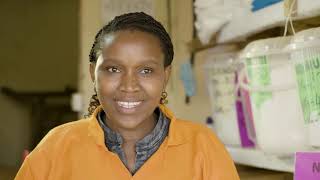
The Ellen MacArthur Foundation highlights how a circular economy for food is thriving in East Africa, with farmers and entrepreneurs in Kenya and Uganda achieving profit while protecting nature. Five films showcasing these circular food systems will be available from July on the Foundation's digital channels.
As a UK charity, the Ellen MacArthur Foundation accelerates the transition to a circular economy through business, learning, and insights. Explore their Food initiative, "Inside the Circular Economy: Africa" learning opportunities, and connect with them via their website, YouTube, Instagram, Facebook, Twitter, and LinkedIn.

Globally, 500 million smallholder farmers produce much of the world's food yet disproportionately face hunger, poverty, and climate change. Improving farm design and management for productivity and profitability is vital. Emma Naluyima, a Ugandan farmer, exemplifies this, achieving abundant, diverse food on one acre through circular resource management, healthy soils, and appropriate technology.
The Ellen MacArthur Foundation, a UK charity, accelerates the transition to a circular economy. Learn more about their initiatives, Emma Naluyima's work, and the circular economy in Africa.
Read more: Ellen MacArthur Foundation Food initiative | Inside the Circular Economy in Africa | About Emma Naluyima | Ellen MacArthur Foundation

Food loss is a major challenge in Africa; up to 50% of produce never reaches markets, impacting farmer incomes and food security. Agricycle addresses this using passive solar dehydrators and market linkages, helping over 35,000 farmers globally secure fair prices and invest in a better life.
The Ellen MacArthur Foundation, a UK charity, accelerates the circular economy transition. Explore their Food initiative, the Circular Economy in Africa, and learn more about Agricycle.
For more insights, visit the Ellen MacArthur Foundation website or subscribe on YouTube.

African smallholder farming faces low productivity due to depleted soil nutrients, hindering livelihoods and impacting biodiversity. Safi Organics addresses this by producing village-level fertilizer from local agricultural by-products. This technology reduces costs, sequesters carbon, and can boost farmers' yields by up to 30%.
The Ellen MacArthur Foundation, a UK charity accelerating the circular economy, supports such initiatives. Learn more about their Food initiative, Circular Economy in Africa, and Safi Organics. For more on the Foundation's work, visit their website.

Bridget Anderson, Deputy Commissioner of Recycling and Sustainability at the New York City Department of Sanitation, discusses the city's collaborative approach to introducing a circular economy.
The Ellen MacArthur Foundation, a UK charity, accelerates the transition towards a circular economy through business, learning, insights, and communications.
For more insightful videos, subscribe to The Ellen MacArthur Foundation on YouTube. Explore their work further at ellenmacarthurfoundation.org and follow them on Instagram, Facebook, Twitter, and LinkedIn.

Cities annually produce one billion tons of organic waste, often dumped at high cost, causing pollution and emissions. Insects offer a proven, sustainable solution, efficiently converting this waste into food, feed, and nutrient-rich compost. Companies like Sanergy and InsectiPro show how insects transform waste into profit, supporting soil fertility and a circular food economy.
The Ellen MacArthur Foundation, a UK charity, accelerates the transition to a circular economy. Explore our Food initiative, Circular Economy in Africa, and featured companies InsectiPro and Sanergy. Subscribe to our YouTube channel, visit our website and social media for more.

Marta Suplicy, from São Paulo City Hall's Municipal Secretary of International Affairs, discusses how a shift to a Circular Economy would benefit the cosmopolitan city of São Paulo. This initiative aligns with the work of the Ellen MacArthur Foundation, a UK charity dedicated to accelerating the transition towards a circular economy through business, learning, and insights.
For more insightful content, subscribe to the [Ellen MacArthur Foundation YouTube channel](https://www.youtube.com/channel/UCQAC2otE5_agzHZPnk3mE5w?sub_confirmation=1). Explore their work further on their [website](https://www.ellenmacarthurfoundation.org) and connect via [Instagram](http://instagram.com/EllenMacArthurFoundation), [Facebook](http://www.facebook.com/ellenmacarthurfoundation), [Twitter](http://www.twitter.com/circulareconomy), and [LinkedIn](https://www.linkedin.com/company/ellen-macarthur-foundation/).

Wayne Hubbard, CEO of ReLondon, discusses how London can benefit from a circular economy and its integration with ReLondon's Green New Deal initiatives.
The Ellen MacArthur Foundation, a UK charity, is dedicated to accelerating the transition to a circular economy through business, learning, and insightful analysis. For more information and videos, visit their website or subscribe to their YouTube channel.
Follow the Foundation online: Instagram, Facebook, Twitter, and LinkedIn.
Environmental Scientist and Advocate
What EarthSayers stands for
Discover Diverse Voices on EarthSayers
Unlike algorithm-driven platforms that push you into a content bubble, we ensure you hear a variety of perspectives from scientists, activists, Indigenous leaders, business innovators, and everyday citizens working toward sustainability.
EarthSayers CINEMA
Watch, learn and lead—sustainability starts with you.
The Many Passions of Matteo Lane
Matteo Lane is a multifaceted artist—stand-up comedian, painter, singer, and Broadway performer. In this interview, he shares how these skills intertwine in his creative process, likening art to a tree that branches out in various directions.
We explore his role as Billy Flynn in Broadway’s Chicago, his journey from bar shows to international comedy tours, and the evolution of gay representation in comedy. Lane also discusses his artistic roots at the School of the Art Institute of Chicago, his admiration for Maria Callas, and his philosophy of focusing on the journey of creation rather than the end product.
Official website: pbs.org/americanmasters


