



Special Collections:
The Circular Economy


In this week's episode of the Circular Economy Show, @Joe Iles interviews @Zaid Hassan about his book's conclusion that "it's not that hard" to implement change, despite the extensive efforts of many organizations. Zaid argues that much of this effort is misdirected, noting that the real challenge lies in solving a problem for the first time, after which others will follow suit.
Watch the full conversation and subscribe to the Circular Economy Show to stay updated. The Ellen MacArthur Foundation is dedicated to accelerating the transition to a circular economy to address major global challenges. Subscribe for more insightful videos here, and learn more about our work at ellenmacarthurfoundation.org.
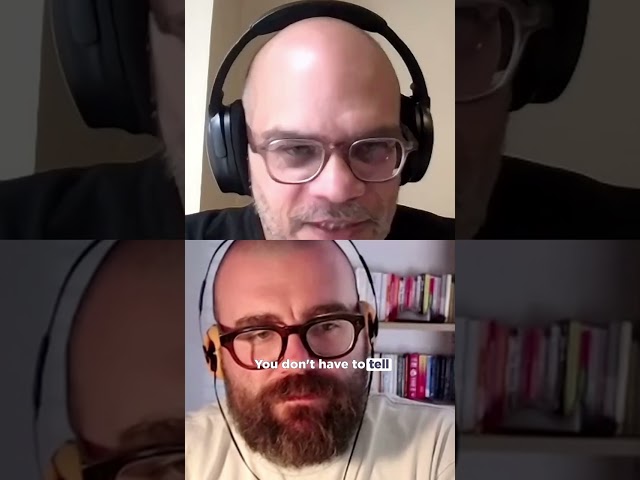
Zaid Hassan discusses why top-down rollouts fail to resonate locally, emphasizing the importance of adaptable solutions for implementing the circular economy.
Watch the full episode for more insights. The Ellen MacArthur Foundation is dedicated to accelerating the transition to a circular economy to address climate change, biodiversity loss, waste, and pollution. Subscribe for more videos: YouTube. Learn more about our work at ellenmacarthurfoundation.org. Follow us on Instagram and LinkedIn.

AI is increasingly capable of analysis, but implementing the circular economy requires different skills and practices that we are not trained in. Discover more about this crucial topic in the full episode.
The Ellen MacArthur Foundation is dedicated to accelerating the transition to a circular economy to address major challenges like climate change and pollution. Subscribe for more insightful videos: YouTube. Learn more about our work at ellenmacarthurfoundation.org and follow us on Instagram and LinkedIn.
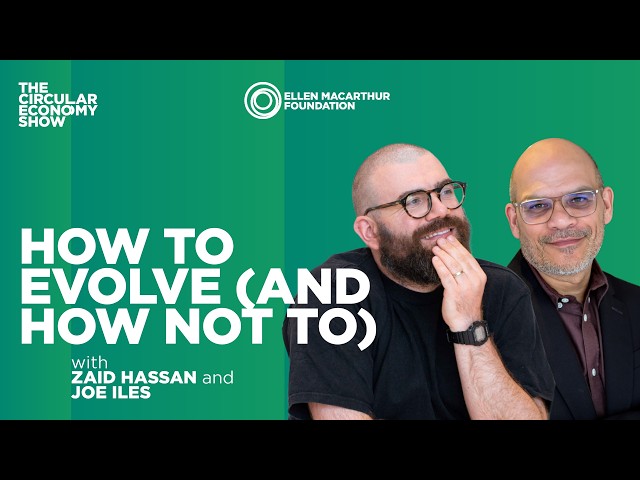
Zaid Hassan, a strategist and writer with 25 years in systems change, critiques the field for its ineffective progress. In a conversation with Joe Iles, he discusses the disconnect between beautiful diagrams and real change, emphasizing that AI will soon take over many skills. His new book concludes with the phrase "it's not that hard," highlighting a simpler approach to systems change.
Hassan has advised global organizations like the World Bank and Oxfam and authored notable works including Social Labs Revolution (2014) and How To Evolve And How Not To (2026). Learn more about his work at xinx.co. For more insights, subscribe to The Ellen MacArthur Foundation on YouTube at this link.

Zaid Hassan, a strategist and writer with 25 years of experience in systems change, critiques the field for relying on ineffective diagrams and skills that AI will soon replace. In a conversation with Joe Iles, he shares insights from his new book, emphasizing that meaningful change is achievable.
Hassan has advised organizations like the World Bank and Oxfam and authored notable works including Social Labs Revolution (2014) and How To Evolve And How Not To (2026). For more insightful videos, subscribe to the Ellen MacArthur Foundation. Learn more about our mission to promote a circular economy at ellenmacarthurfoundation.org.

New materials can be costly, and added premiums from suppliers can inflate prices for brands. In this week's episode of the Circular Economy Show, Georgia Parker from Fashion for Good proposes that brands pay the premium directly to material producers, allowing the rest of the supply chain to function normally.
The full conversation is available now. The Ellen MacArthur Foundation is dedicated to accelerating the transition to a circular economy to address critical issues like climate change and pollution. Subscribe for more videos: YouTube. Learn more about our work at ellenmacarthurfoundation.org.

In this week's episode of the Circular Economy Show, Lewis Shuler from Paradise Textiles discusses the fashion industry's long-standing reliance on polyurethane-based elastane, which has been used "by default rather than by intent." Fortunately, there are already market solutions available to reduce this dependency.
The full conversation is available now. The Ellen MacArthur Foundation is dedicated to accelerating the transition to a circular economy to address critical issues like climate change and pollution. Subscribe for more insightful videos here and learn more about our work at www.ellenmacarthurfoundation.org.

A circular economy for fashion requires garments designed for reuse. Elastane poses a significant challenge, and emerging alternatives vary in performance. Developers must clearly identify the specific problems they aim to solve and the types of garments their materials are best suited for.
In this episode of the Circular Economy Show, Georgia Parker from Fashion for Good and Lewis Shuler from Paradise Textiles discuss how ‘Stretching Circularity’ benchmarks these materials, helping brands and designers select the appropriate stretch for each garment. To watch the full conversation, follow this link.

Collection and recycling systems are vital for a circular economy, yet many regions lack the necessary infrastructure. The report ‘Closing the Loop: Transforming urban waste systems and protecting Brazil’s rivers’ reveals that Brazil could recover BRL 14 billion in recyclable value currently lost to landfills. Approximately 800,000 waste pickers play a crucial role in this system, often without recognition or fair compensation.
In partnership with the City of Recife, Brazil's Federal Government, and companies like Mars, Nestlé, @PepsiCo, and Unilever, we aim to invest R$300 million in enhancing collection and recycling systems. This initiative seeks to transform urban waste management and provide valuable lessons for policymakers across Brazil. Learn more about our efforts at Ellen MacArthur Foundation.

Elastane is the fiber that provides stretch in clothing, commonly found in activewear, denim, lingerie, and basics. In this week's episode of the Circular Economy Show, Georgia Parker from Fashion for Good discusses the challenges of recycling old clothes into new ones.
The full conversation is now available. The Ellen MacArthur Foundation is dedicated to promoting a circular economy to address critical issues like climate change and pollution. Subscribe for more insightful videos here. Learn more about our initiatives at www.ellenmacarthurfoundation.org and follow us on Instagram and LinkedIn.

In this episode of the Circular Economy Show, Seb Egerton-Read interviews Georgia Parker from Fashion for Good and Lewis Shuler of Paradise Textiles about the challenges elastane presents for clothing recycling. They explore the project 'Stretching Circularity,' which aims to unite brands, innovators, and experts to enhance the recyclability and commercial viability of lower-impact elastane alternatives.
The discussion highlights the need for coordinated industry efforts to address the fragmented state of bio-based and recycled materials. While no single solution exists, collaboration is essential to tackle the scale of the problem effectively.
For more insights, subscribe to The Ellen MacArthur Foundation on YouTube: YouTube Channel and visit our website.

Most clothing contains elastane, which poses a significant challenge for recycling. In this week's episode of the Circular Economy Show, Georgia Parker from Fashion for Good and Lewis Shuler from Paradise Textiles discuss the project "Stretching Circularity" with Seb Egerton-Read. This initiative aims to explore scalable bio-based and recycled elastane alternatives by collaborating with brands, innovators, and experts.
Tune in to learn about the project's setup and its potential impact on textile-to-textile recycling.
Subscribe to The Ellen MacArthur Foundation for more insightful videos: YouTube. Discover more about our work at ellenmacarthurfoundation.org.

Solar energy is gaining traction in unexpected regions, such as Pakistan, even without significant policy support. Jeremy Oppenheim from SYSTEMIQ discusses how solar has made life more affordable and convenient, driving market growth.
Part 2 of the discussion between CEO Joe Murphy and Jeremy is now available on The Circular Economy Show. Watch the full episode to learn more about this topic. For more insights, subscribe to The Ellen MacArthur Foundation's YouTube channel here and explore our work at www.ellenmacarthurfoundation.org.
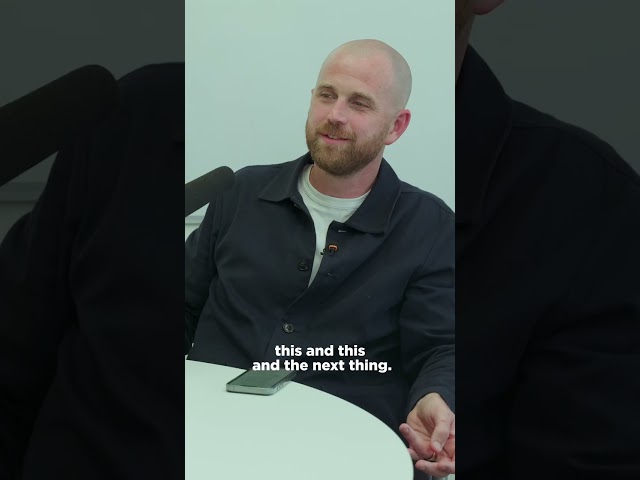
In the latest episode of The Circular Economy Show, Jeremy Oppenheim, Founding Partner at SYSTEMIQ, discusses the allure of complex problems and the challenge of finding straightforward solutions that resonate with people. This is part 2 of a conversation with CEO Joe Murphy.
Watch the full episode to learn more about the circular economy. The Ellen MacArthur Foundation is dedicated to accelerating the transition to a circular economy to address major global issues like climate change and pollution. Subscribe for more insights: YouTube. Discover more about our work at ellenmacarthurfoundation.org.

In part two of our series, Conversations with a CE/O, CEO Joe Murphy interviews Jeremy Oppenheim, Founding Partner of SYSTEMIQ, about the necessary changes in the next decade. Oppenheim emphasizes the importance of focusing on consumer demand, arguing that the circular economy should prioritize how circular products can make life easier and cheaper for buyers.
When this criterion is met, transformation can occur rapidly, even in unexpected areas. What will it take for circular products and services to become standard? Subscribe to the Circular Economy Show to stay updated.
Learn more about the Ellen MacArthur Foundation's mission to promote a circular economy at www.ellenmacarthurfoundation.org. Follow us on Instagram and LinkedIn.

In this episode of The Circular Economy Show, Jeremy Oppenheim, Founding Partner at SYSTEMIQ, discusses the importance of making people's lives better as a key test for successful circular economy and climate solutions. This is part 2 of a conversation with CEO Joe Murphy.
Watch the full episode to learn more. The Ellen MacArthur Foundation is dedicated to accelerating the transition to a circular economy to address major challenges like climate change and pollution. Subscribe for more insights on their YouTube channel and explore their work at ellenmacarthurfoundation.org.

At COP26 in Glasgow, the finance sector pledged significant capital for climate initiatives. Jeremy Oppenheim, Founding Partner at SYSTEMIQ, discusses the limitations of this funding and the actual flow of money in the climate sector. This is part 2 of a conversation with Joe Murphy, CEO of the Ellen MacArthur Foundation, featured on The Circular Economy Show.
To learn more, watch the full episode. The Ellen MacArthur Foundation aims to accelerate the transition to a circular economy to address climate change, biodiversity loss, waste, and pollution. Subscribe for more videos: YouTube. Discover more about our work at ellenmacarthurfoundation.org.

In part two of Conversations with a CE/O, Jeremy Oppenheim discusses market dynamics with Joe Murphy, CEO of the Ellen MacArthur Foundation. They explore the inadequacy of $100 trillion in capital for climate initiatives, highlighting examples like Pakistan's solar boom and a copper mine in Mongolia. The conversation emphasizes the need for a new approach as the voluntary playbook has reached its limits.
Watch part 1 of this conversation here. For more insights, subscribe to the Ellen MacArthur Foundation's YouTube channel here. Learn more about our mission to promote a circular economy at www.ellenmacarthurfoundation.org.
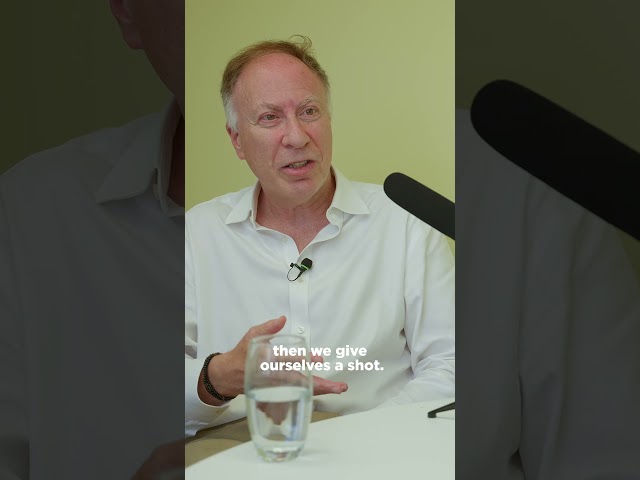
In part two of this series, Jeremy Oppenheim discusses market dynamics with Joe Murphy, CEO of the Ellen MacArthur Foundation. They explore the challenges of climate capital, from Pakistan's solar boom to a copper mine in Mongolia, and why the voluntary strategies used over the past decade are no longer sufficient.
Conversations with a CE/O features leaders shaping the economy, focusing on the evolving circular economy. Watch the full episode to learn how the next decade's work must adapt. Subscribe for more insights from the Ellen MacArthur Foundation: YouTube. Discover more about our mission at ellenmacarthurfoundation.org.

"Conversations with a CE/O" is a new series on The Circular Economy Show featuring Ellen MacArthur Foundation CEO Joe Murphy. He engages with leaders shaping the economy, exploring how the circular economy must evolve over the next decade.
Listen to the full episode now. The Ellen MacArthur Foundation is dedicated to accelerating the transition to a circular economy to address critical issues like climate change and pollution. Subscribe for more insightful videos here. Learn more about our work at ellenmacarthurfoundation.org and follow us on Instagram and LinkedIn.
Environmental Scientist and Advocate

