



Special Collections:
The Circular Economy


Ken Pucker argues that rules, such as carbon pricing implemented in regions from the EU to China, are effective in addressing market failures and accelerating emissions reductions. In the latest episode of the Circular Economy Show, he discusses the necessary steps toward a circular economy with CEO Joe Murphy, focusing on piloting policies that create a level playing field.
For more insights, listen to the full episode now. The Ellen MacArthur Foundation is dedicated to promoting a circular economy to combat climate change, biodiversity loss, waste, and pollution. Subscribe for more videos: YouTube. Learn more about our initiatives at ellenmacarthurfoundation.org.

Ken Pucker argues that expecting one company to bear the cost of carbon while competitors do not is unsustainable. He highlights this as a flaw in the concept of "Sustainability Inc," where the first mover incurs costs while peers benefit.
In a discussion with CEO Joe on the Circular Economy Show, Ken emphasizes that while voluntary action is important, it is not enough to drive the necessary changes for scaling the circular economy. Listen to the full episode by subscribing to the Circular Economy Show.

Ken Pucker discusses how LED bulbs and waste reduction are economically viable, while more challenging solutions are not yet profitable. He highlights that goodwill and voluntary actions alone cannot address this market failure.
To explore potential solutions, listen to the latest episode of Conversations with a CE/O with Joe Murphy. For more insights, subscribe to The Ellen MacArthur Foundation on YouTube: YouTube Channel. Learn more about our mission to promote a circular economy at ellenmacarthurfoundation.org.

Former Timberland COO Ken Pucker discusses the limitations of corporate efforts to address market failures in emissions reduction on the latest episode of Conversations with a CE/O on the Circular Economy Show.
The Ellen MacArthur Foundation is dedicated to accelerating the transition to a circular economy to combat climate change, biodiversity loss, waste, and pollution. Subscribe for more insightful videos here. Learn more about our work at www.ellenmacarthurfoundation.org and follow us on Instagram and LinkedIn.

Ken Pucker, former COO of Timberland, joins Conversations with a CE/O to discuss the overestimation of voluntary individual business actions. They delve into the necessary changes to rewrite the rules of the game and the obstacles that remain.
Listen to the full episode by subscribing to The Circular Economy Show on your favorite podcast platform. The Ellen MacArthur Foundation is dedicated to accelerating the transition to a circular economy to address major challenges like climate change and pollution. Learn more about their work at ellenmacarthurfoundation.org.

In this episode of Conversations with a CE/O, Ken Pucker discusses Timberland's pioneering approach to corporate sustainability, including its use of renewable energy and commitment to community service. However, he highlights a significant oversight: while Timberland reduced Scope 1 and 2 emissions, Scope 3 emissions accounted for 96% of their total, which went unmeasured.
Ken shares his concerns about the limitations of voluntary actions in addressing market failures and the complexities surrounding the New York Fashion Act. He emphasizes the need for effective regulation and carbon pricing to drive meaningful change. For more on Ken's work, visit kenpucker.com. Subscribe to the Ellen MacArthur Foundation for more insights: YouTube.

Aluminium and copper constitute the majority of a phone's mass, while trace metals and rare earths, though minimal in quantity, are crucial and recoverable. Currently, there is little incentive to recover these materials.
Changing the incentive structure can transform material flow in the economy. For the full episode, check the link in the bio.
The Ellen MacArthur Foundation is dedicated to promoting a circular economy to address climate change, biodiversity loss, waste, and pollution. Subscribe for more insights: YouTube. Learn more about our work at ellenmacarthurfoundation.org.

Sean Jones, Circular Technology Lead at the Ellen MacArthur Foundation, reflects on a day spent disassembling phones with industry teams and iFixit. The challenge lies in the glue used to assemble phones, making repairs costly and often leading to device disposal. Additionally, some components are digitally locked, preventing unauthorized replacements from functioning.
However, improved design practices and emerging right-to-repair laws offer hope for extending the life cycles of critical materials in our devices. Tune in to the latest episode of The Circular Economy Show for more insights.
Subscribe to the Ellen MacArthur Foundation on YouTube for more videos: YouTube Channel. Learn more about our work at ellenmacarthurfoundation.org.

Data centres will source minerals from various locations. While mining will continue, the focus is on reducing the need for new materials by extending the life of devices through proper recycling.
Listen to the latest episode of The Circular Economy Show. The Ellen MacArthur Foundation is dedicated to promoting a circular economy to address climate change, biodiversity loss, waste, and pollution. Subscribe for more insights: YouTube. Follow us on Instagram: Instagram and LinkedIn: LinkedIn.

Discover how the over two billion phones expected to go to waste in North America can transform into economic and design opportunities in the latest episode of The Circular Economy Show.
The Ellen MacArthur Foundation is dedicated to accelerating the transition to a circular economy, addressing critical issues like climate change and pollution. Subscribe for more insights: YouTube. Learn more about our initiatives at ellenmacarthurfoundation.org and follow us on Instagram and LinkedIn.

After returning your phone, a staggering 96% of critical minerals in North America’s devices are either exported or end up in landfills, according to the Ellen MacArthur Foundation's report, ‘Missing signal: Unlocking a circular economy for mobile phones in North America.’ Authors Sean Jones and Xain Storey discuss the breakdown in the recycling chain and the importance of design, repair, and policy in addressing this issue, especially as AI increases demand for minerals like copper and cobalt.
Join the conversation on how a circular economy can mitigate this demand and explore topics such as the right to repair, the challenges of recycling phones, and innovative design solutions. For more insights, subscribe to The Ellen MacArthur Foundation on YouTube: YouTube Channel.

What happens after you return your phone? The Ellen MacArthur Foundation’s report, ‘Missing signal: Unlocking a circular economy for mobile phones in North America,’ reveals that up to 96% of critical minerals in North American phones are either exported or end up in landfills. Authors Sean Jones and Xain Storey discuss the breakdown in the supply chain and the necessary design, repair, and policy changes needed, especially as demand for minerals like copper and cobalt rises due to AI.
For more insights, listen to the full episode. The Ellen MacArthur Foundation is dedicated to promoting a circular economy to address climate change and pollution. Subscribe for more videos: YouTube. Learn more about our work at ellenmacarthurfoundation.org.

In this episode of Circular Snapshots, we cover key circular economy developments from August to October. Highlights include the World Circular Economy Forum's debut in South Asia and its upcoming event in New York, over 70 developing countries advocating for a robust plastics treaty, and the imminent EU Circular Economy Act. Additionally, Octopus Energy and CATL are collaborating on shared truck battery infrastructure, while a new report explores the challenges of financing textile recycling.
Thank you for watching! The Ellen MacArthur Foundation is dedicated to accelerating the transition to a circular economy to address critical issues like climate change and pollution. Subscribe for more insights: YouTube. Learn more about our work at ellenmacarthurfoundation.org.
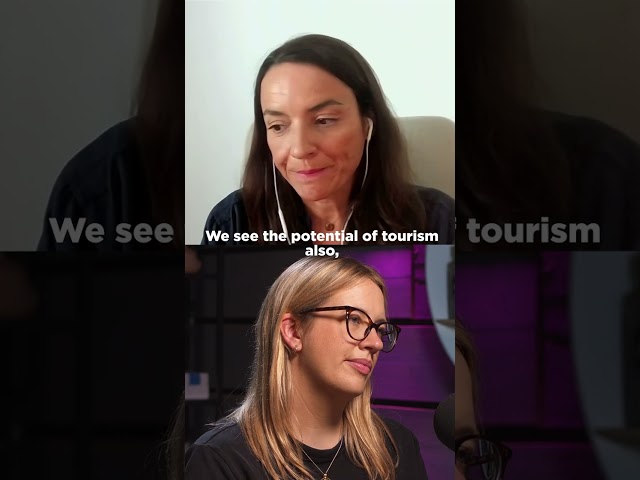
Can your holiday change your perspective on waste? Iberostar has established over 1,300 water refill stations, eliminating the need for single-use plastic bottles in its hotels. Virginia Fernández-Trapa from @[UN Tourism handle] highlights the potential of tourism to promote circular solutions, allowing guests to adopt sustainable habits.
Thank you for watching! The Ellen MacArthur Foundation is dedicated to accelerating the transition to a circular economy to address climate change, biodiversity loss, waste, and pollution. Subscribe for more insightful videos: YouTube. Learn more about our work at ellenmacarthurfoundation.org. Follow us on Instagram and LinkedIn.
Thank you for watching this video. The Ellen MacArthur Foundation is an international charity dedicated to accelerating the transition to a circular economy, addressing critical issues like climate change, biodiversity loss, waste, and pollution.
Subscribe for more insightful videos: YouTube. Learn more about our work at ellenmacarthurfoundation.org. Follow us on Instagram and LinkedIn.

In remote destinations, hotels may struggle with waste management due to a lack of local infrastructure for reuse and recycling. This week on the Circular Economy Show, Virginia Fernández-Trapa from UN Tourism discusses the importance of developing the right infrastructure for circular tourism.
Thank you for watching! The Ellen MacArthur Foundation is dedicated to accelerating the transition to a circular economy to address challenges like climate change and pollution. Subscribe for more insights: YouTube. Learn more about our work at ellenmacarthurfoundation.org and follow us on Instagram and LinkedIn.

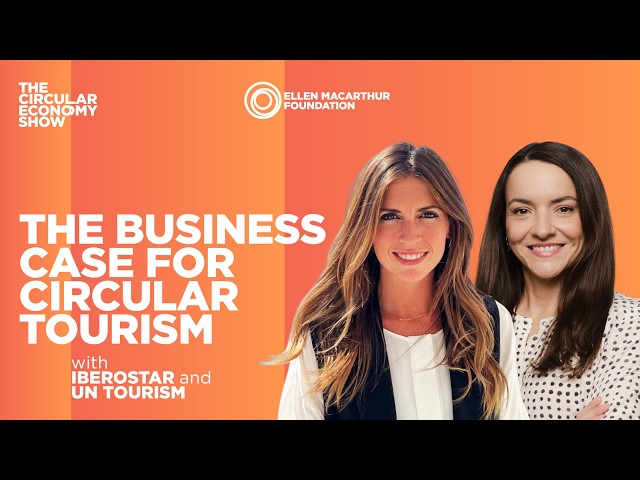
On November 18, tourism will be a key topic at COP31 in Antalya, Türkiye, focusing on zero waste and the circular economy. This week on The Circular Economy Show, Pippa speaks with Patricia Dueñas from Iberostar Hotels & Resorts and Virginia Fernández-Trapa from UN Tourism about the practicalities of circular tourism, emphasizing the need for local infrastructure, consistent policies, and coordination.
The year ahead is crucial as 2027 is designated the UN’s International Year of Sustainable and Resilient Tourism. This presents an opportunity for businesses and destinations to collaborate on sustainable practices.
For more insights, subscribe to The Ellen MacArthur Foundation on YouTube: YouTube Channel. Learn more about our mission at ellenmacarthurfoundation.org.

Thank you for watching! The Ellen MacArthur Foundation is an international charity dedicated to accelerating the transition to a circular economy, addressing critical issues like climate change, biodiversity loss, waste, and pollution.
Subscribe for more insightful videos on their YouTube channel. Learn more about their work at ellenmacarthurfoundation.org. Follow them on Instagram and LinkedIn.
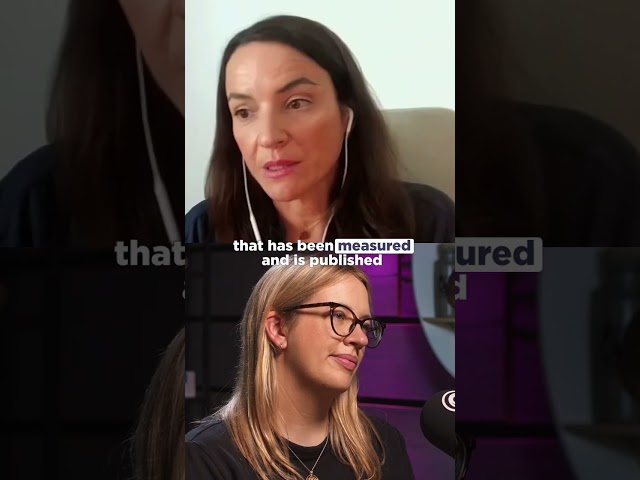
Virginia Fernández-Trapa from UN Tourism emphasizes that evidence is key to making circularity an investable asset. While data exists for food waste, more information is needed for plastics and textiles.
The Ellen MacArthur Foundation is dedicated to accelerating the transition to a circular economy to address major challenges like climate change and pollution. Subscribe for more insights: YouTube. Learn more about our work at ellenmacarthurfoundation.org and follow us on Instagram and LinkedIn.

The circular economy has many informative diagrams, but do they inspire action? While diagrams can explain systems, they often lack the emotional impact needed to motivate change. Watch the full episode to explore this topic further.
The Ellen MacArthur Foundation is dedicated to accelerating the transition to a circular economy, addressing critical issues like climate change and pollution. Subscribe for more insightful videos: YouTube. Learn more about our work at ellenmacarthurfoundation.org and follow us on Instagram and LinkedIn.
Environmental Scientist and Advocate

