




Special Collections:
The Economy

This animation explores a post-consumer society, envisioning a future with fewer work hours, increased re-skilling, homesteading, and small-scale enterprises. These shifts aim to reduce the consumer economy's overall size and impact. It is narrated by economist and best-selling author Juliet Schor and produced by The Center for the New American Dream.
Dr. Schor's book, *Plenitude*, delves deeper into these concepts. You can order it from Amazon or find it at your local bookstore.

Discussions on the Green Economy often overlook its social dimensions. The UN Research Institute for Social Development (UNRISD) addresses this through its project on the Social Dimensions of Green Economy and Sustainable Development. Explore their work at UNRISD.
For broader information on the Green Economy, consult the United Nations Environment Programme (UNEP) at UNEP. Following both UNRISD and UNEP offers insight into how the UN integrates social, environmental, and economic aspects to advance sustainability.

Growth is an unsustainable, temporary state.
Dr. Susan Krumdieck, an Associate Professor at the University of Canterbury, researches this topic.
Her expertise spans fuel cells, alternative energy, energy conservation, energy systems engineering, and materials for energy systems.
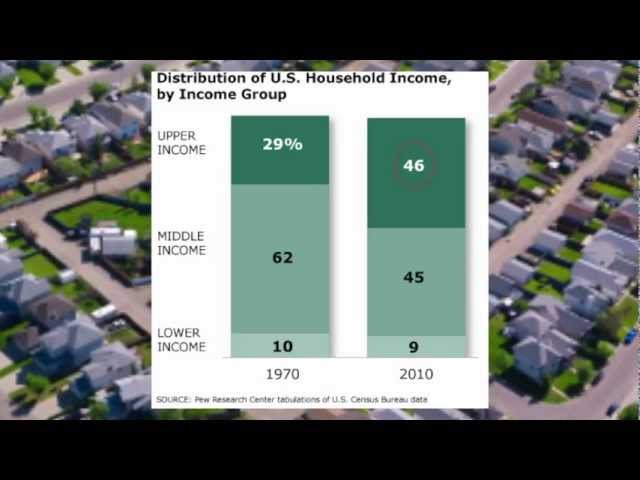
Since 2000, the middle class has declined in size, income, and wealth, also losing some faith in the future. A new report, released August 22, 2012, explores how middle-class Americans view themselves, their future, and presidential candidates.
Read the full report here.
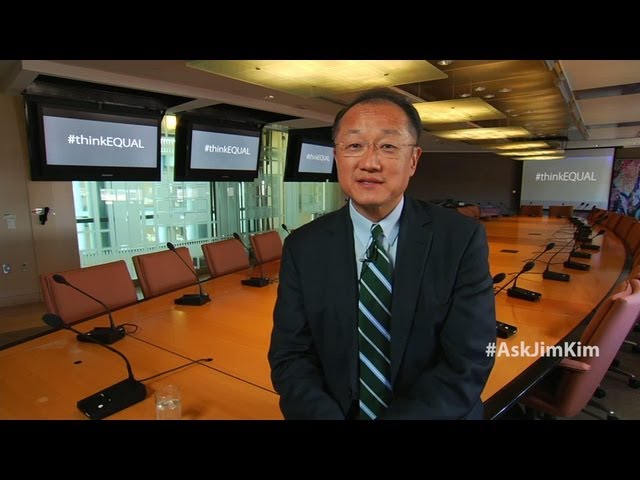
Dr. Jim Kim seeks public input on three vital questions:
What are the best ways to eradicate poverty? What innovations can bring prosperity to all? How can member countries' vast experience be harnessed?
Submit your questions and comments via the form below, or tweet using #AskJimKim. Follow @WorldBank on Twitter for updates.

Sir Partha DasGupta, Frank Ramsey Professor Emeritus of Economics at the University of Cambridge, discusses the economic significance of natural capital. He highlights how ecosystems, including farmland and forests, have historically been overlooked in economic considerations.
In his article, "Nature's Role in Sustainable Economic Development," published in Philosophical Transactions B for the Royal Society's 350th anniversary, Sir Partha advocates for integrating nature into economic development. Wendy Barnaby interviews him in a podcast about these crucial insights.

Author Charles Eisenstein addresses the future of our economy and money, questioning a return to "normal." His book, *Sacred Economics*, challenges established financial patterns and offers resolutions for the future.
Eisenstein recently spoke to a sell-out crowd in Portland, Oregon. The video of this enlightening talk is proudly presented by The Center for a Sustainable Today, Evolver, and Transition PDX.
Order *Sacred Economics* from Amazon or visit your local bookstore.

Many believe our economic model is broken. Pioneers like Maurice Strong, Bjorn Stigson, Matthew Kiernan, and Jonathon Porritt advocate challenging current orthodoxies. They envision a transition from an economically-driven framework to one founded on ecological infrastructure.
This perspective is featured in one of twenty Ray Anderson Memorial Interviews. These interviews are part of The Regeneration Project, a joint initiative by Sustainability and GlobeScan.
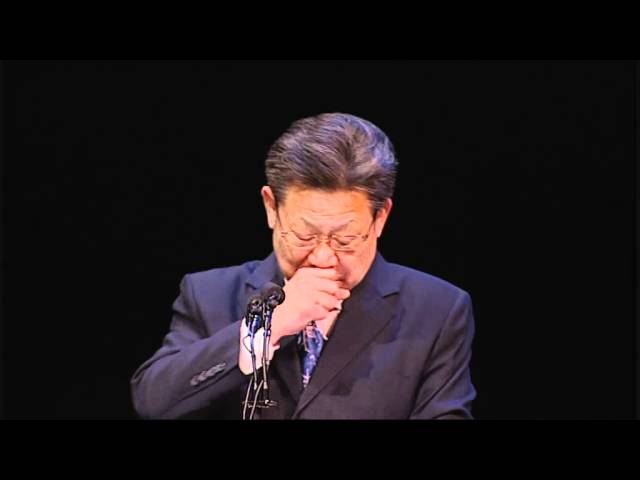
Sha Sukang delivered a speech at the High-Level Consultation on 'Realising Inclusive and Green Growth: Business & Industry Consultation with Government and Civil Society.' This event occurred at the World Forum in The Hague, Netherlands, on April 11, 2012.
Further information is available on the Rio+20 Summit.

Sir Mark Moody Stuart, a member of the Foundation for the Global Compact and the International Integrated Reporting Committee (IIRC), was interviewed in Beijing in January 2011.
He discussed the vital importance of Integrated Reporting in today's business environment. The interview also covered the crucial next steps required to ensure its continued success.

In February 2012, Jonathon Porritt, CBE, Chancellor of Keele University, delivered a public lecture.
His address focused on "Sustainability and The Future of Capitalism."

L. Hunter Lovins, President and founder of Natural Capitalism Solutions (NCS), discusses the business case for sustainability and the vital role of entrepreneurs. This presentation was part of a TEDx San Joaquin event.
NCS educates senior decision-makers across business, government, and civil society. Its mission is to restore and enhance natural and human capital, thereby increasing prosperity and quality of life. Lovins is also the author of *The Way Out*.

In his speech "What is Value?", Rory Sutherland argues that numbers hold little significance. He contends that poor or "atrocious" numbers actively undermine true value.
His bio is available here.

Adopting environmental and social sustainability principles enhances performance, with an ESG (Environmental, Social, and Governance) corporate culture fostering long-term success. This is detailed in research by Harvard Business School's George Serafeim, co-authored with Robert G. Eccles (Harvard Business School) and Ioannis Ioannou (London Business School).
Their paper, "The Impact of a Corporate Culture of Sustainability on Corporate Behavior and Performance," highlights these benefits. Download the working paper. Courtesy of FS Insight and Holland Financial Centre.
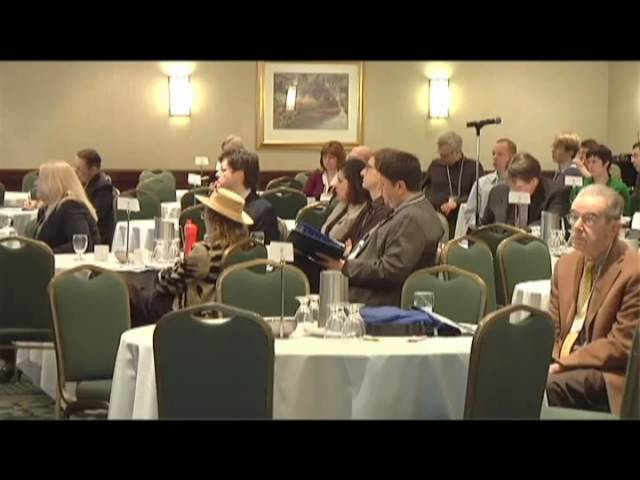
Hazel Henderson is a futurist, columnist, and world-renowned expert on sustainable development. She is the author of *Ethical Markets: Growing the Green Economy*.
This presentation features Henderson discussing quality of life indicators, incorporating feedback from the audience.

Deirdre Kent, co-founder of the New Economics Party in New Zealand, outlines specific recommendations for transforming our economic system into a sustainable one.
For more information and ideas on their proposals, visit the New Economics Party website.

David Korten, author of "Agenda for a New Economy," presented at the 39th Trinity Institute National Theological Conference. His address explored "Radical Abundance: A Theology of Sustainability."
Learn more about David Korten at davidkorten.org. His book, "Agenda for a New Economy," can be ordered from Amazon.com.

Joseph Stiglitz, a Nobel laureate in economics, discusses Occupy Wall Street.
Stiglitz graduated from Amherst College and earned his Ph.D. from MIT, becoming a full professor at Yale in 1970. His extensive teaching career includes Princeton, Stanford, MIT, and Oxford, where he was Drummond Professor. He received the Nobel Prize for his analyses of markets with asymmetric information.
He is currently a University Professor at Columbia University and Co-Chair of its Committee on Global Thought.

Riane Eisler, a social scientist, attorney, and author, has profoundly influenced cultural transformation. A leader in peace, sustainability, and economic equity, her pioneering human rights work expanded the focus of international organizations to include women's and children's rights.
Her newest book, The Real Wealth of Nations: Creating a Caring Economics, proposes a new economic approach. It gives visibility and value to the essential work of caring for people and nature.

Richard Wolff, an economist and Professor Emeritus at the University of Massachusetts, Amherst, addresses the current economic crisis. His speech delves into its roots and proposes potential solutions.
This presentation was filmed by Paul Hubbard at Brown University, Providence, RI, on December 2, 2009.
Environmental Scientist and Advocate
What EarthSayers stands for
Discover Diverse Voices on EarthSayers
Unlike algorithm-driven platforms that push you into a content bubble, we ensure you hear a variety of perspectives from scientists, activists, Indigenous leaders, business innovators, and everyday citizens working toward sustainability.
EarthSayers CINEMA
Watch, learn and lead—sustainability starts with you.
The Many Passions of Matteo Lane
Matteo Lane is a multifaceted artist—stand-up comedian, painter, singer, and Broadway performer. In this interview, he shares how these skills intertwine in his creative process, likening art to a tree that branches out in various directions.
We explore his role as Billy Flynn in Broadway’s Chicago, his journey from bar shows to international comedy tours, and the evolution of gay representation in comedy. Lane also discusses his artistic roots at the School of the Art Institute of Chicago, his admiration for Maria Callas, and his philosophy of focusing on the journey of creation rather than the end product.
Official website: pbs.org/americanmasters


