




Special Collections:
Forests and Oceans
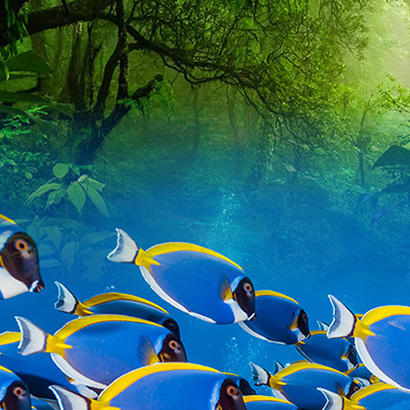

The Obama Administration's proposal to open the Southeast coast to offshore drilling threatens jobs, tourism, and risks devastating oil spills. Communities, elected leaders, and industries across Virginia, North Carolina, South Carolina, and Georgia oppose this plan. The administration is currently reexamining and revising its proposed leasing plan.
For more details on the proposal and grassroots opposition, visit Protect Our Coast Now and Oceana's Grassroots Opposition page. Music by Adam Lindquist. Sounds from Freesound.org users nicStage, patchen, fedexico, soundmary, Corsica_S, and Loremonger, under an Attribution license.

Seismic airgun testing, used for offshore oil and gas, poses a severe threat to the ocean's soundscape. These powerful blasts injure marine life, endanger regional fisheries, and jeopardize the livelihoods of those dependent on the ocean.
The Bureau of Ocean Energy Management (BOEM) is currently preparing an environmental impact statement (EIS) on expanding seismic testing in the Mid and South Atlantic. BOEM must incorporate the latest science to fully assess these risks. Help raise awareness about this destructive practice. For more information, visit: http://oceana.org/seismic.

Proposed seismic airgun testing in the Atlantic Ocean threatens to injure thousands of whales and dolphins. Oceana is campaigning to stop this harmful activity before it begins.
Support Oceana's efforts. Please sign their petition to stop seismic testing on the White House's website: Stop Seismic Airgun Testing Petition.

Over 1.3 million small-scale fishers in the Philippines, among the nation's poorest, depend entirely on the ocean for their livelihood and to prevent hunger. Learn more about their situation: http://bit.ly/1j7zbrq
Unfortunately, these vital Philippine waters are in crisis. Over 75% of fishing grounds are overexploited, once vibrant coral reefs are degraded, and whale sharks face accidental deaths.
By acting together now, we can restore the ocean's abundance and secure the future for these communities.

Oceana's "One Name One Fish" report emphasizes the critical need for species-specific names for all seafood throughout the supply chain. Understand the full case by reading the report: oceana.org/onenameonefish.
Music for this project was composed by Adam Lindquist: fa-da-do.com. Additional sounds were sourced from numerous contributors on Freesound.org.
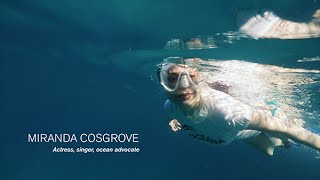
Deafening seismic airgun tests are proposed for the Atlantic. We must urge the Obama administration to halt these tests.
Join Miranda and others to protect dolphins. Find out more and take action here: http://bit.ly/1oo4l9J

Actress Kate Mara ("House of Cards") is partnering with Oceana, driven by her passion for oceans and wildlife. Together, they aim to remove drift gillnets from the water.
These nets indiscriminately entangle and kill thousands of non-targeted marine animals annually, including whales, dolphins, and sea turtles. Watch Kate's powerful call to action against this destructive practice.
Join Kate and Oceana to protect our oceans: http://goo.gl/lPBdvB

Actress Cobie Smulders ("How I Met Your Mother," "The Avengers") is collaborating with Oceana to protect the ocean's hidden gems. She recently explored Belize's South Water Caye Marine Reserve, an area within the Mesoamerican reef teeming with vibrant marine life, including sponges, ascidians, seaweeds, and coral.
Watch her Q&A with Oceana and join their mission to safeguard these vital ocean treasures: http://bit.ly/1mJbty2

"The Office" co-stars Rashida Jones and Angela Kinsey visited Ambergris Caye, swimming with Oceana at the world's second-largest barrier reef. They shared their insights on its beauty, biodiversity, and urgent need for protection.
Join Rashida and Angela in safeguarding the ocean's hidden treasures. Learn more and support their efforts here.

Actress Cobie Smulders, known for “How I Met Your Mother” and “The Avengers,” is passionate about ocean conservation. She partners with Oceana to protect vital marine ecosystems.
Smulders recently joined Oceana for a dive in Belize's South Water Caye Marine Reserve. This area, part of the Mesoamerican reef, teems with diverse marine life, including vibrant sponges, ascidians, seaweeds, and coral.
Join Cobie & Oceana to protect the ocean's hidden treasures.

"Drill, Spill, Repeat?" examines the BP oil disaster's impact four years later, presenting perspectives from Gulf communities still facing daily struggles. The film reveals what's at stake when an industry operates without sufficient oversight.
Witness these critical experiences by watching the full film here. For more information, visit the project website here.

Four years after the BP Oil Spill, our short documentary, "Drill, Spill, Repeat?", examines the disaster's ongoing impact. It shares the perspectives of those still facing daily struggles due to an industry out of control.
The Gulf's communities reveal what's truly at stake for the future. Discover more by watching the documentary: Drill, Spill, Repeat?

Many seafood lovers don't know where their fish comes from. This lack of transparency in the supply chain enables illegal fishing, fraud, public health risks, and even human trafficking, harming oceans, consumers, and honest businesses.
Traceability is the solution. By tracking fish from boat to plate—including how, when, and where it was caught—we increase transparency and accountability. This reduces fraud and prevents illegally sourced products from entering the market.
Learn more at oceana.org/FishStories. Music by Adam Lindquist. Sounds via Freesound.org users.

On May 14, bad weather caused an underwater pipe from the National Oil Company (ENAP) to break, resulting in a slurry oil spill in Quintero Bay.
A month later, the [Oceana Chile](https://chile.oceana.org/) team observed a sticky mass of oil "pieces" on the seabed, trapping and dragging marine organisms like marmola crabs, bivalves, gastropods, and algae. Over 1,400 tons of material were removed, though the total spilled oil remains unknown.
This incident marked ENAP's third spill in under two years.

Shark finning is a brutal, wasteful practice where fins are removed at sea and the shark is discarded, leading to its slow death. Driven by global demand for shark fin soup, this practice contributes significantly to the decline of shark populations worldwide, threatening nearly a quarter of all shark species with extinction.
While shark finning is illegal in U.S. waters, the sale and possession of fins are not. Banning these would prevent the U.S. from participating in the global fin trade, establishing the nation as a leader in protecting these vital ocean creatures. Congress must act to end the buying and selling of shark fins in the United States. Learn more at oceana.org/FinBanNow.
Music by Adam Lindquist.

On World Sea Turtle Day, Lilimar, Oceana, One More Generation, and children nationwide delivered over 12,500 letters and drawings to the White House. These messages urged President Obama and Secretary Penny Pritzker to protect threatened and endangered sea turtles in U.S. waters.
Representing all 50 states, the letters called for a simple solution: mandatory use of Turtle Excluder Devices (TEDs) in shrimp nets. These metal grates allow sea turtles and other marine life to escape, preventing their capture by shrimp trawls in the South Atlantic and Gulf of Mexico.
Implementing TEDs would save thousands of sea turtles, reduce seafood waste, and create new markets for U.S. shrimpers.
Music by Adam Lindquist: http://adamlindquist.com/

Clownfish are fascinating marine creatures, known for their vibrant colors and unique symbiotic relationship with anemones. How much do you truly know about these captivating fish?
Expand your knowledge and discover more by visiting this resource: Learn About Clownfish

There are seven species of sea turtles, with green turtles living up to 80 years.
Discover more fascinating turtle facts on our website.

Julia Butterfly Hill lived for over two years in a 2000-year-old redwood in Northern California, protecting it from a logging company's chainsaws.
During her first winter, a severe storm nearly killed her on her tiny perch. Julia recounts the horror and profound life lessons learned from those terrifying hours.

Join our mission to tackle excessive plastic use by supermarkets. We need your ideas to demand change.
Download the app at http://www.anewmission.org/join-the-revolution to contribute to this movement.
Thanks to @MakeAChangeWorld and @AnewMission. #DrasticPlastic
Environmental Scientist and Advocate
What EarthSayers stands for
Discover Diverse Voices on EarthSayers
Unlike algorithm-driven platforms that push you into a content bubble, we ensure you hear a variety of perspectives from scientists, activists, Indigenous leaders, business innovators, and everyday citizens working toward sustainability.
EarthSayers CINEMA
Watch, learn and lead—sustainability starts with you.
The Many Passions of Matteo Lane
Matteo Lane is a multifaceted artist—stand-up comedian, painter, singer, and Broadway performer. In this interview, he shares how these skills intertwine in his creative process, likening art to a tree that branches out in various directions.
We explore his role as Billy Flynn in Broadway’s Chicago, his journey from bar shows to international comedy tours, and the evolution of gay representation in comedy. Lane also discusses his artistic roots at the School of the Art Institute of Chicago, his admiration for Maria Callas, and his philosophy of focusing on the journey of creation rather than the end product.
Official website: pbs.org/americanmasters


