



Special Collections:
Forests and Oceans
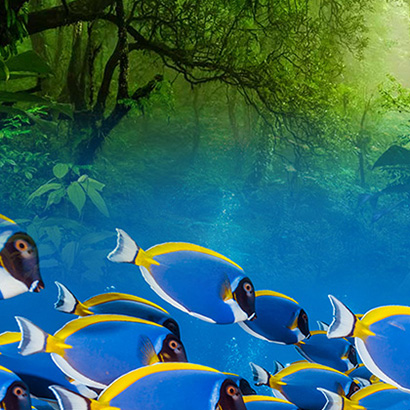

Join us as we explore the Great Pacific Garbage Patch in our full journey. Discover the impact of plastic pollution on our oceans.
Watch the video here: Great Pacific Garbage Patch Journey.

Join us as we explore our research and testing journey in the Great Pacific Garbage Patch.
Watch the latest video on YouTube: https://youtu.be/-eK7kXX3_qM.

The Canpac Valkyrie recently departed from Port Alberni, British Columbia, on a groundbreaking mission to identify plastic hotspots in the Great Pacific Garbage Patch using drones, AI, and modeling. The crew, including scientists and engineers from The Ocean Cleanup, aimed to create a "weather forecast" for plastic, guiding the ship through areas of high plastic density as part of their Smart Steering Strategy.
This video provides an exclusive behind-the-scenes look at six weeks of testing at sea, showcasing drone flights, environmental monitoring, and technology demonstrations. Highlights include successful plastic detection 2,400 km from land and insights into how their technologies work together. Stay updated by subscribing to their YouTube channel: YouTube. Learn more at The Ocean Cleanup.

The Great Pacific Garbage Patch is a shifting mass of plastic, often described as a plastic soup, with specific areas known as hotspots that have higher plastic density.
Identifying these hotspots is crucial for effective cleanup efforts. Our team returned to the GPGP to test the Smart Steering Strategy, which utilizes ocean models, GPS, and aerial drones to locate current hotspots and predict future ones. More updates on our six-week journey at sea will be shared soon. Stay tuned!
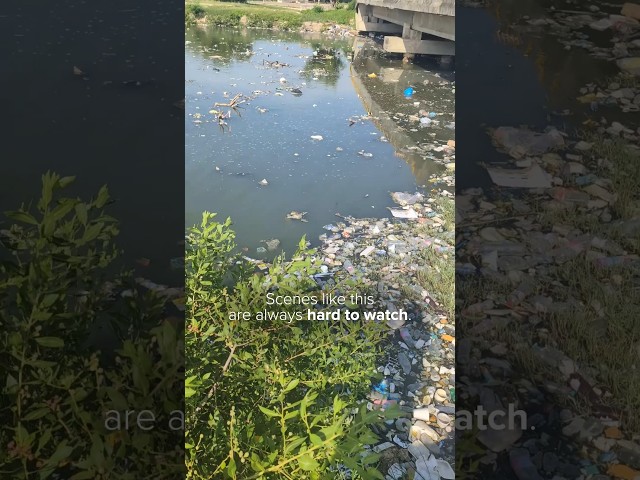
We signed a Memorandum of Understanding with the Cartagena Mayor’s Office to address plastic pollution in Cartagena’s waterways and prevent waste from reaching the Caribbean Sea.
This initiative represents another step in our efforts across Colombia, where we collaborate with local partners to stop plastic pollution at its source.

Emily Penn, founder of eXXpedition, leads all-women sailing expeditions to combat plastic pollution and turn scientific insights into actionable solutions. She believes everyone possesses a unique "superpower" that can contribute to ocean protection, emphasizing that collective strengths can drive meaningful change.
Our oceans face unprecedented threats, necessitating urgent action. At the UN Ocean Conferences in Lisbon (2022), Nice (2025), and boot Düsseldorf (2026), we connected with numerous Ocean Heroes dedicated to this cause. For more information, visit Meeresstiftung, follow us on Instagram, Facebook, or check our Linktree.

In this TED lesson, legendary ocean researcher Sylvia Earle presents stunning ocean imagery and alarming statistics about its rapid decline. She shares her TED Prize wish, urging us to protect the vital blue heart of our planet.
With over 40 years of experience in deep ocean exploration and more than 50 undersea expeditions, Earle is a passionate advocate for the oceans and their inhabitants. Watch her inspiring talk here.

Photographic artist Chris Jordan examines contemporary mass culture through his work, highlighting the impact of waste. His series, Running the Numbers, transforms millions of plastic bottles into an ocean, illustrating the scale of plastic pollution.
Jordan's large-scale prints are part of public and private collections worldwide, and he has been featured in various media outlets. He has also published three photography books. TEDx events, which are independently organized, aim to foster discussion and connection through TEDTalks and live speakers.


Interested in our efforts in the Philippines? Discover more by watching our latest YouTube video.

Plastic pollution is a significant challenge in the Philippines, with local authorities and organizations actively addressing the issue. The Ocean Cleanup is collaborating with the Department of Environment and Natural Resources (DENR) and local partners to combat plastic pollution in the Manila Bay Region through its 30 Cities Program.
The deployment of Interceptor 028 in the Meycauayan River marks the beginning of operations in Manila, with plans for additional deployments. Collaboration is essential in tackling the plastic crisis, and The Ocean Cleanup is committed to supporting ongoing initiatives in the city. Together, we can make a difference in the fight against plastic pollution.
Stay updated by subscribing to our YouTube channel: https://bit.ly/371k8sN. Learn more and support us at https://www.theoceancleanup.com/.
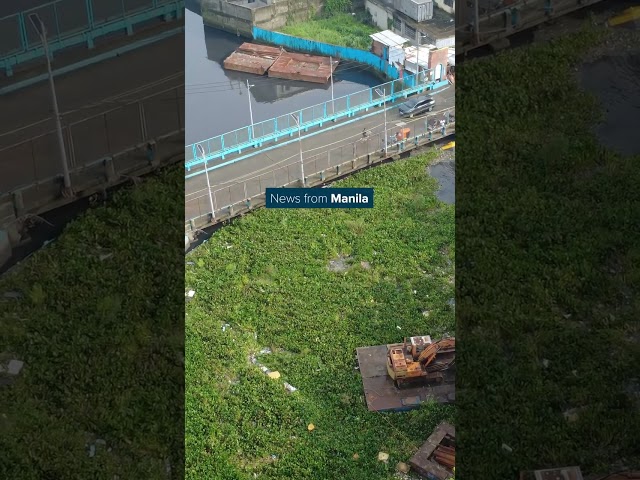
Interceptor 028 is now operational in the Philippines, targeting the 370 to 540 tonnes of plastic that flow through the Meycauayan River system into Manila Bay annually.
Collaborating with the City of Meycauayan and the City Environment and Natural Resources Office (CENRO), we aim to monitor and enhance the interceptor's performance. This deployment is the first of several planned for the Manila Bay region under our 30 Cities Program, which seeks to reduce plastic pollution from some of the world's most contaminated waterways.

On-demand fishing gear could revolutionize ocean fishing by reducing the risk of entanglement for marine animals like whales and sea turtles. This innovative gear keeps buoys and lines submerged until fishers activate a signal for release, minimizing hazards to wildlife.
Discover how this technology benefits both marine life and fishers by visiting Oceana. Stay updated by subscribing to Oceana's channel at this link or become a Wavemaker to support ocean conservation at this link. Follow Oceana on Facebook, Instagram, X, and TikTok.

During the rainy season in Guatemala, our Interceptors are actively preventing trash from entering the Gulf of Honduras and the Caribbean Sea.

Meet the mesmerizing chambered nautilus! Unlike its octopus and squid relatives, this cephalopod features a stunning, spiraled shell. The chambers in its shell enable the nautilus to pump air in and out, allowing it to propel itself backwards and turn around.
Discover more about these fascinating creatures at Oceana.

All of these ocean wonders are ANIMALS, not PLANTS! 🤯
Beneath the waves, animals look different from what we're used to on land. Sea sponges, Christmas tree worms, and leafy sea dragons are just a few examples of the mind-boggling animals often mistaken for flora.

Giant manta rays are the largest rays in the world, with wingspans reaching up to 26 feet and weights exceeding 5,000 pounds.
Discover more about these fascinating creatures in our Marine Life Encyclopedia.

In September, The Ocean Cleanup's Interceptor 006 successfully intercepted over 210,000 kilograms of trash before it could reach the Gulf of Honduras. Additionally, an MoU was signed with Barranquilla to implement Interceptor solutions in the Magdalena River and Caribbean, marking Colombia as the 13th country of operation.
The organization also became a Nonprofit Impact Partner of 1% for the Planet, allowing companies to support its mission. Founder Boyan Slat was recognized on The Independent’s Climate 100 list for 2026. For World Cleanup Day, participants from 42 countries shared photos of their efforts to pick up plastic waste.
Pacific sardines are vital for the survival of whales, seabirds, sea lions, and large fish along the U.S. West Coast. As a key species in the ocean food web, their decline significantly affects marine ecosystems.
Unfortunately, their population has plummeted by 97% over the past 20 years due to overfishing and changing ocean conditions. Despite this, the Trump administration is advocating for increased fishing of this vulnerable species. Join us in defending these essential fish and the wildlife that depends on them: https://oceana.ly/47o2nET

September brought significant advancements in ocean conservation, highlighting new discoveries and impactful legislation for marine life.
Stay updated on these inspiring stories that are making a difference for our oceans.
Environmental Scientist and Advocate

